


Quick answer: Senior hunting dogs still need year-round flea and tick protection, often more than young dogs, because tick-borne disease hits older kidneys and joints harder. Pick a product with your vet based on your dog’s kidney and liver function and any seizure history. Topicals and collars skip the stomach, while oral chews avoid skin irritation. Add a yearly tick-disease blood test with a urine protein check, and treat new stiffness or low energy as a reason to test, not just “old age.”
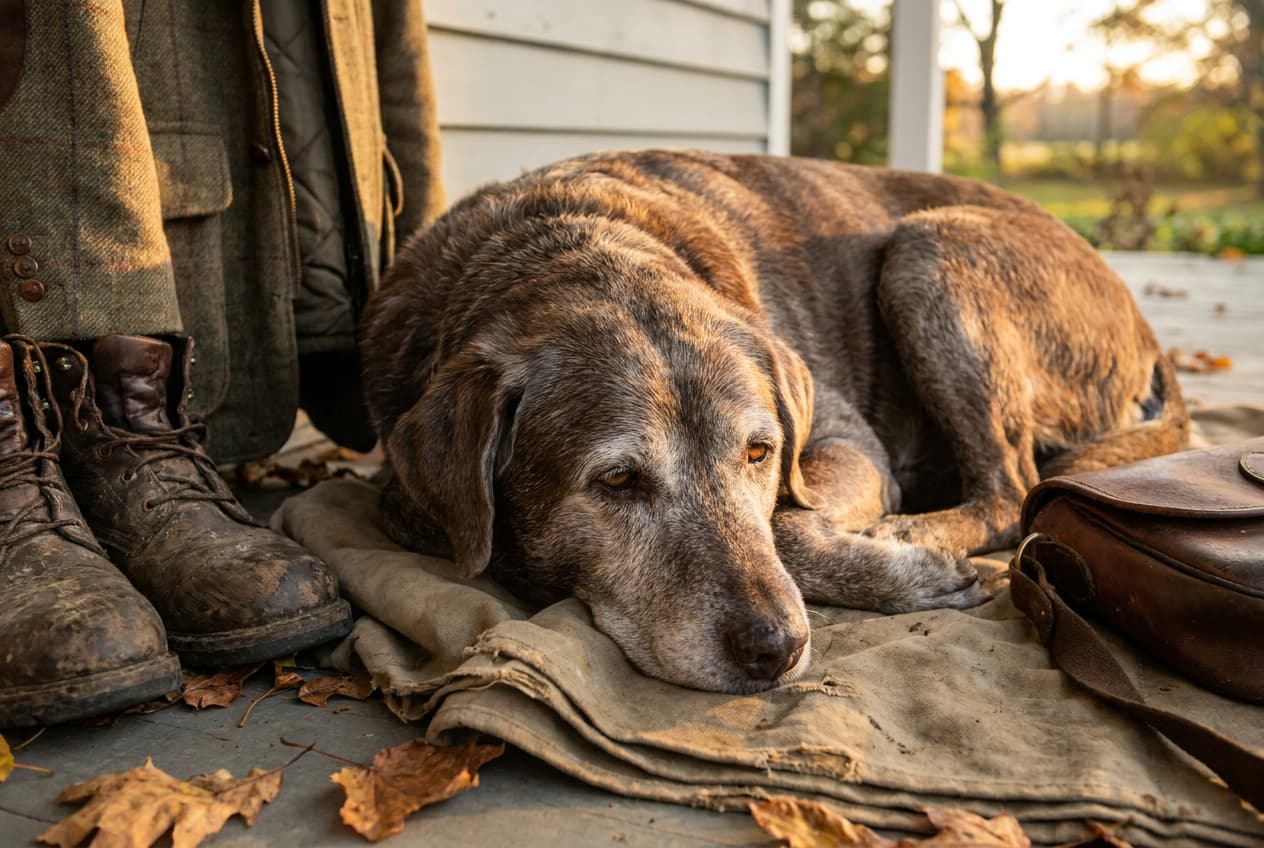
That gray-muzzled Lab or veteran setter has earned an easier season, but it’s still walking through the same tick-filled cover. Older dogs have less reserve. A tick infection a 3-year-old shakes off can put a 10-year-old on the couch, and Lyme-related kidney damage is far more dangerous in a dog whose kidneys are already slowing down. Here’s how to adjust flea and tick care for an aging hunting partner.
What changes when a hunting dog gets older
- Kidneys and liver work less efficiently, which affects how some medications are handled. That’s why your vet may want bloodwork before choosing a product.
- Joint problems hide tick disease. Arthritis and Lyme-related lameness look alike. A sudden change deserves a test.
- Thinner skin can react more to spot-ons and collars.
- Other medications, like joint pain relievers or heart drugs, need to be checked against any flea and tick product.
Oral vs. topical: which is easier on an older dog?
| Type | Upside for seniors | Downside for seniors |
|---|---|---|
| Topical spot-on | Nothing to swallow, so no stomach upset | Possible skin irritation. Timing around baths and swims. |
| Collar | Months of protection, nothing to swallow, repels ticks (Seresto) | Skin irritation under the collar. Check fit with neck arthritis. |
| Oral chew | No skin contact. Unaffected by water. Some include heartworm protection. | Occasional vomiting or diarrhea. Isoxazolines can rarely cause neurologic signs. |
For dogs with a sensitive stomach, many owners find topicals or collars easier. Giving an oral chew with a meal can reduce stomach upset. The FDA says isoxazoline chews (NexGard, Simparica, Bravecto, Credelio) are used safely in most dogs but can rarely cause tremors, stumbling or seizures, even in dogs with no history. If your old dog has ever had a seizure, tell your vet before choosing one. Read the FDA fact sheet.

Tick disease and the senior dog’s kidneys
About 1% to 5% of dogs infected with Lyme disease develop Lyme nephritis, a kidney disease that can be fatal (AVMA). Retriever breeds are reported to be at higher risk. For older dogs, that makes two checks worthwhile:
- A yearly tick-disease screen (Lyme, Anaplasma, Ehrlichia and heartworm), best done after the fall season.
- A urine protein test if the screen is positive or your dog is drinking and urinating more.
More: Lyme disease in hunting dogs and tick-borne diseases in hunting dogs.
Warning signs in an older dog
- A drop in stamina over weeks, not months
- Stiffness or limping that moves between legs
- Drinking or urinating more, vomiting, weight loss
- Pale gums, bruising or nosebleeds
- Scooting, or rice-like segments near the tail or in stool. That’s flea-transmitted tapeworm, which needs a dewormer your vet can provide.
What about “natural” flea and tick repellents?
Many owners of older dogs want gentler options. Be careful here:
- Essential oils aren’t proven to prevent tick-borne disease, and some, including tea tree oil, can be toxic to dogs, especially in concentrated form.
- “Natural” isn’t the same as safe or effective for a dog walking through Lyme country every weekend.
- What does help without chemicals: daily combing with a metal flea comb, washing bedding in hot water, keeping kennel runs mowed, and a tick check after every outing. These work alongside a proven product, not instead of one.

A senior hunting dog’s flea and tick checklist
- Vet checkup with bloodwork before picking or changing a product. Many vets recommend twice-yearly visits for senior dogs.
- Year-round protection chosen for your dog’s health, not just the price.
- Yearly tick-disease screen plus urine protein check.
- Tick check after every hunt, including the thin-skinned belly, armpits and ears. Use gentle tools: how to remove a tick.
- Shorter, cooler hunts, and don’t hunt through new stiffness. Get it checked first.
Shop flea and tick protection for dogs
Frequently asked questions
Do old dogs still need flea and tick prevention?
Yes. Older dogs handle tick-borne infections and their kidney complications less well than young dogs, so year-round protection matters even more.
Is oral or topical flea treatment better for a senior dog?
Neither is best for every dog. Topicals and collars avoid the stomach, and oral chews avoid skin irritation and aren’t affected by water. Your vet should factor in kidney and liver function, other medications and any seizure history.
Are natural flea repellents safe for older dogs?
Some aren’t. Several essential oils, including tea tree oil, can be toxic to dogs, and none are proven to prevent tick-borne disease.
Why is my senior dog suddenly tired after hunting season?
It may be age, but tick-borne diseases like Lyme, anaplasmosis and ehrlichiosis cause lethargy too. Ask your vet about a tick-disease blood test.
Sources
- American Veterinary Medical Association: Lyme disease in dogs
- FDA: isoxazoline flea and tick products fact sheet
- Companion Animal Parasite Council: Lyme disease
Last reviewed September 30, 2026. General information for hunting dog owners, not veterinary advice. Consult your veterinarian before starting or changing any flea and tick product for a senior dog.
Related: The Labrador retriever as a hunting companion · When to feed your hunting dog · Seresto collar for hunting dogs
Disclosure: HuntingMagazine may earn a commission when you buy through links on this page, at no extra cost to you.