


Quick answer: Most flea and tick products for puppies are labeled to start at 7 or 8 weeks of age, and each one also has a minimum weight. Before that, use a flea comb, a gentle bath and a clean whelping area instead of chemicals. Hunting breed pups grow fast, so weigh your pup before every dose and move up a size when it crosses a weight bracket. Always follow the product label and your vet’s advice.
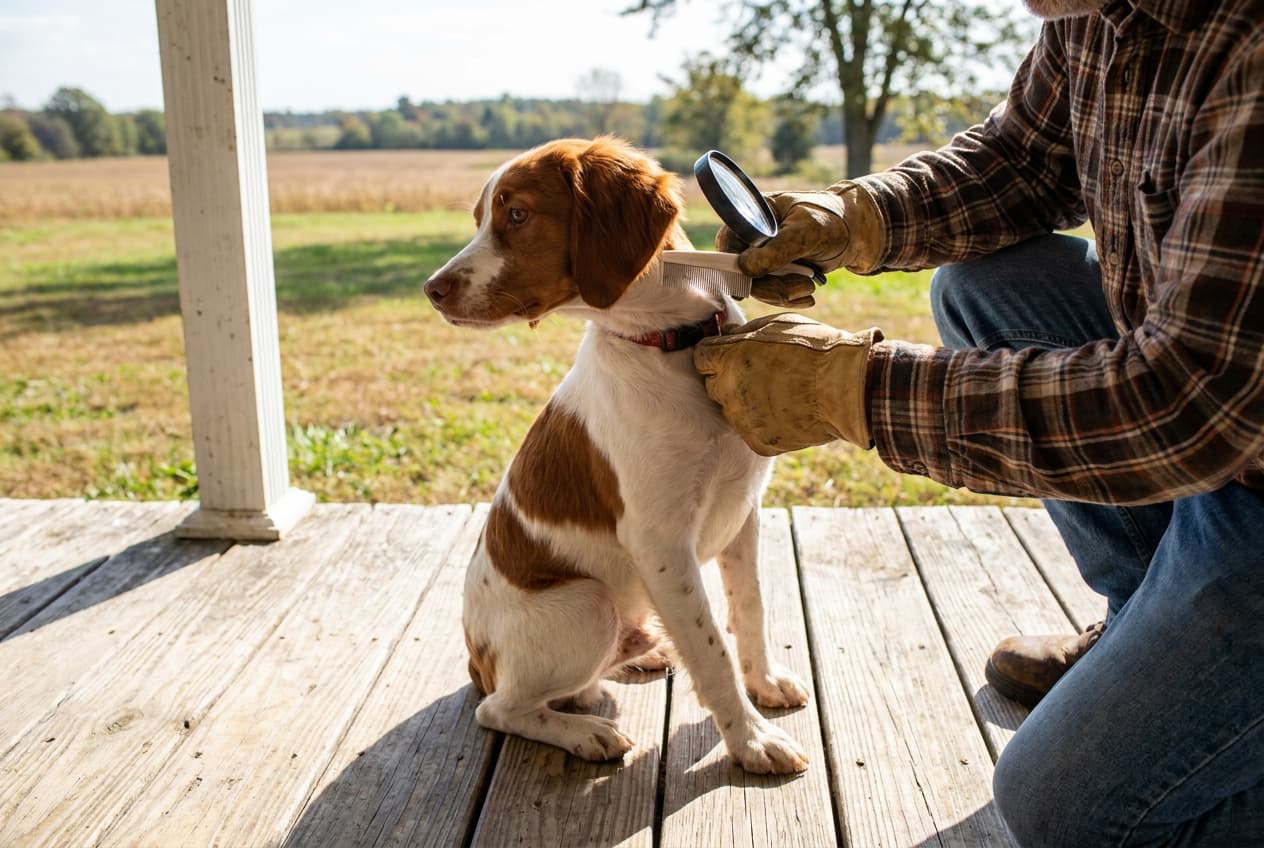
A new Lab, pointer or springer pup is going to be in the yard, the training field and the woods long before its first real hunt. That means fleas and ticks from the start. Puppies are also small, their bodies are still developing, and they change weight almost weekly. So the rules are a bit different from an adult dog. Here’s what’s safe at each age.
Puppy flea and tick age chart
| Product example | Type | Labeled minimum age | Notes |
|---|---|---|---|
| Capstar (nitenpyram) | Oral tablet | 4 weeks and 2 lbs | Fast one-time flea knockdown. Doesn’t last and doesn’t kill ticks. The label notes more serious reactions in pets under 8 weeks or under 2 lbs, so ask your vet first. Label info |
| Seresto collar | Collar | 7 weeks | Small collar under 18 lbs, large over 18 lbs. Label info |
| K9 Advantix II | Topical | 7 weeks | Toxic to cats. Keep cats away from treated dogs. |
| Frontline Plus / fipronil generics (including Amazon Basics) | Topical | 8 weeks | Monthly; sized by weight |
| Simparica Trio | Prescription chewable | 8 weeks and 2.8 lbs | Also covers heartworm, roundworms and hookworms. Label info |
Other prescription chews start anywhere from 8 weeks to 6 months, so always check the label. The FDA notes that isoxazoline chews (NexGard, Simparica, Bravecto, Credelio) are used safely in most dogs but can rarely cause tremors, stumbling or seizures. Talk to your vet, especially if there’s any seizure history in the line. See the FDA fact sheet.
Birth to 7 weeks: the hands-on phase
Most products aren’t labeled this young, so flea control for litters is mostly manual:
- Treat the mother with a product your vet approves for nursing dogs, so she doesn’t bring fleas to the litter.
- Comb daily with a fine-tooth flea comb, dipping it in soapy water to drown the fleas.
- Keep bedding clean. Wash it in hot water often and vacuum the whelping area.
- Ask your vet before bathing very young pups or using anything medicated. Small pups chill quickly and heavy flea loads can cause anemia.
7 to 12 weeks: starting real protection
This is when most breeders and new owners start a labeled product, and it’s usually the same time pups go home and start yard work.
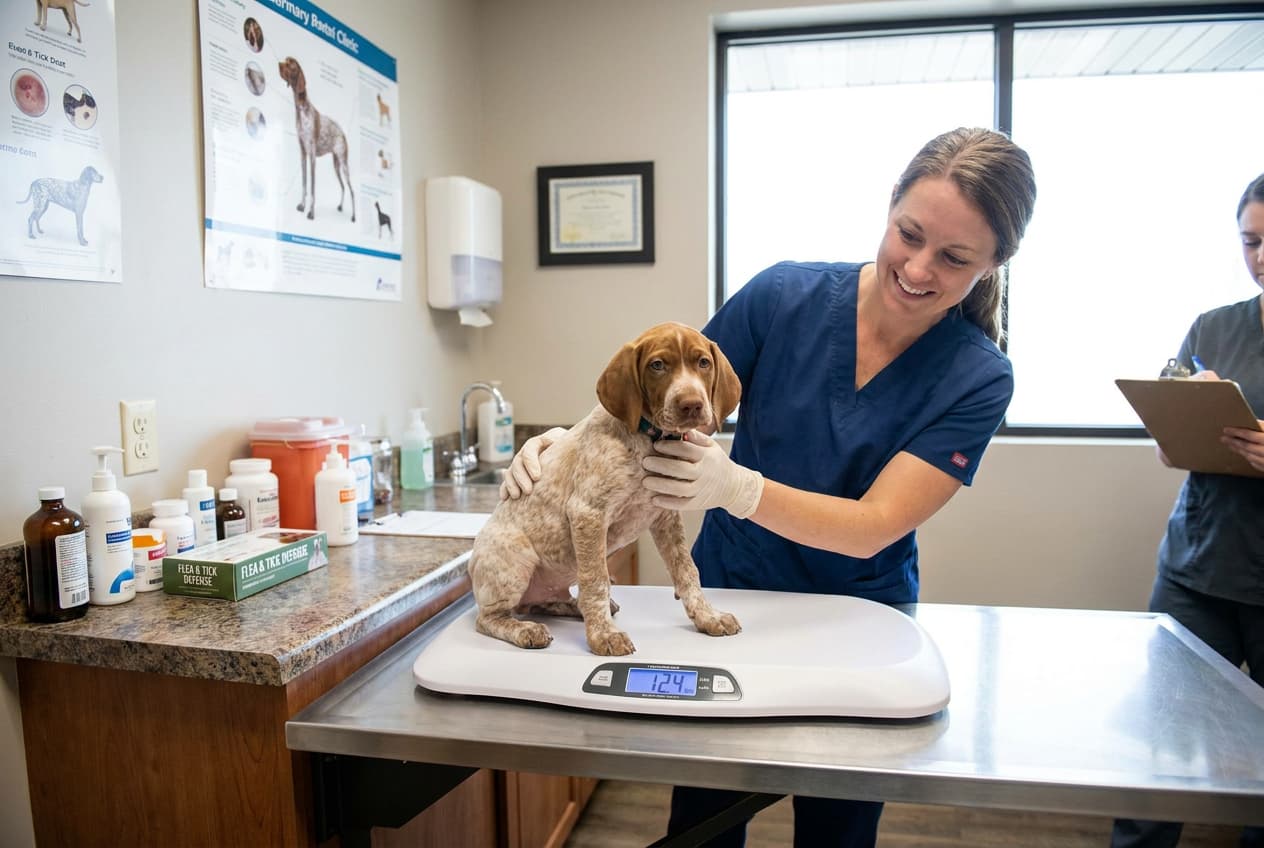
- Weigh the pup on the day you treat. Guessing is how pups get the wrong dose.
- Choose a product labeled for that age and weight. Many hunters start with a collar or a vet-prescribed chew that also covers heartworm.
- Start before the first field outing. Summer training in tall grass is prime tick exposure.
- Do a tick check after every training session. It’s a good habit for both of you.
Why weight-based dosing matters for fast-growing hunting pups
Flea and tick doses are set by weight bracket. A retriever or pointer pup can outgrow a bracket in a few weeks:
- Underdosing (still using last month’s smaller size) can leave gaps in protection right when your pup starts training in tick country.
- Overdosing (buying the big-dog size “to grow into,” or splitting doses) raises the risk of side effects. Never split or combine topical doses unless the label allows it.
- The fix: weigh monthly through the first year. If the pup crosses into the next bracket, use the next size at the next scheduled dose, and ask your vet if you’re unsure.
Dosing matters for hunting pups for another reason too: flea allergy dermatitis. Some pups react hard to just a few flea bites, with intense itching around the tail base and hair loss. Steady, correct-dose protection prevents most of those flare-ups.
The puppy’s first flea bath, step by step
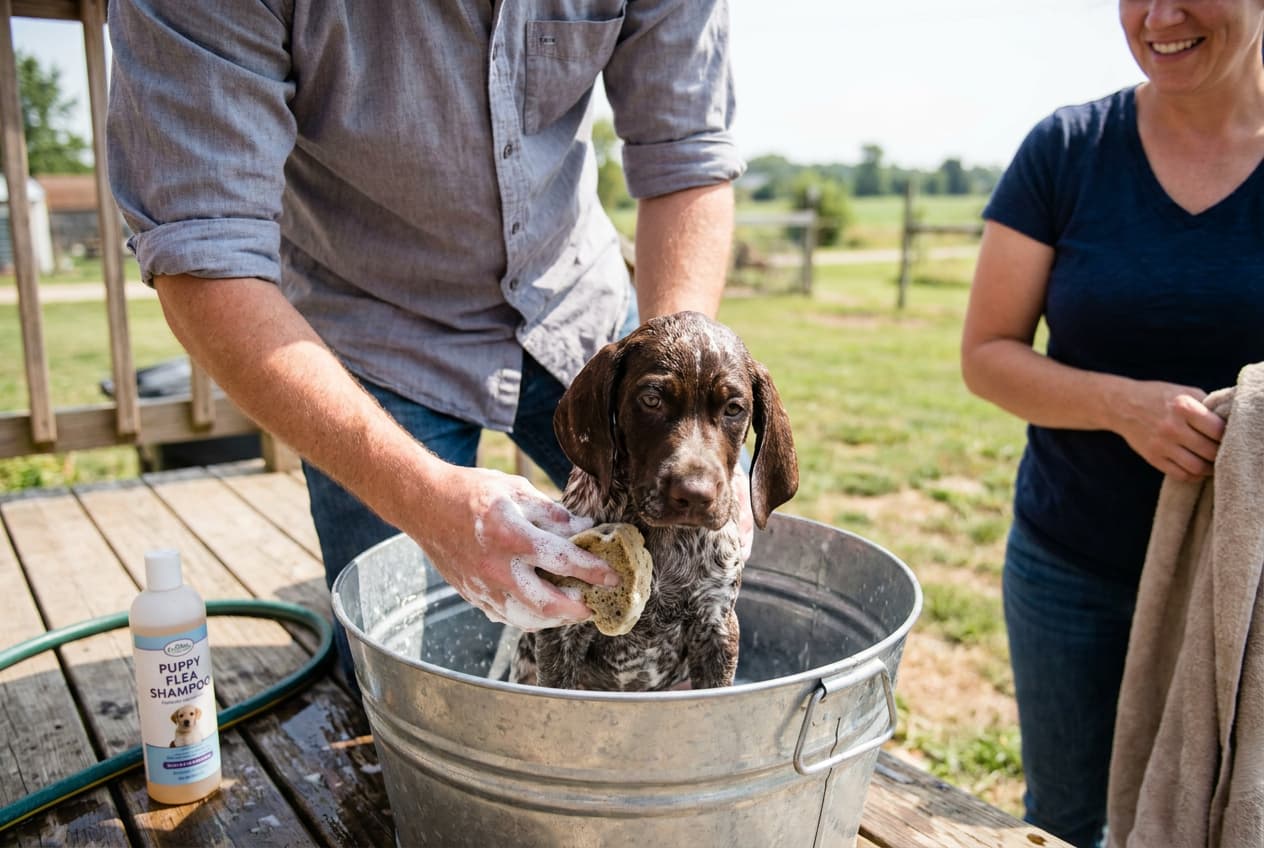
- Use lukewarm water and a gentle puppy shampoo. Only use a flea shampoo if it’s labeled for your pup’s age.
- Lather a ring around the neck first. That stops fleas from running up to the head and ears.
- Work back toward the tail, then comb through with a flea comb while the coat is wet.
- Rinse thoroughly and dry the pup completely. Young pups chill fast.
- If you use a spot-on, check the label for how long to wait between bathing and applying. Many say about 48 hours.
Signs your puppy has fleas or a tick problem
- Scratching or chewing at the tail base, belly or legs
- “Flea dirt”: black specks that turn red on a damp white paper towel
- Pale gums or low energy. Heavy flea loads can cause anemia in small pups. Call your vet.
- Rice-like segments near the tail or in stool, a sign of flea-transmitted tapeworm
- Limping, fever or low energy after tick exposure. See tick-borne diseases in hunting dogs.
Frequently asked questions
When can I start flea and tick prevention on my puppy?
Most products are labeled to start at 7 to 8 weeks, and each also has a minimum weight. Capstar can be used from 4 weeks and 2 lbs as a one-time flea knockdown.
Can I put a Seresto collar on an 8-week-old puppy?
Yes. Seresto is labeled for puppies 7 weeks and older. Use the small collar until the pup is over 18 lbs.
How often should I update my puppy’s flea dosage?
Weigh your pup every month during the first year and move to the next size when it crosses a weight bracket.
Can I use my adult dog’s flea medicine on my puppy?
No. Don’t split adult doses or use a product outside the pup’s labeled age and weight range.
Sources
- Seresto product label information
- Simparica Trio product label information
- FDA: isoxazoline flea and tick products fact sheet
- Companion Animal Parasite Council: tick guidelines
Last reviewed September 30, 2026. This article is general information, not veterinary advice. Ages and weights are from product labels at the time of writing; always read the current label and check with your veterinarian before treating a puppy.
Related: 400 female hunting dog names · Best bird dog breeds · How to remove a tick from your dog
Disclosure: HuntingMagazine may earn a commission when you buy through links on this page, at no extra cost to you.