
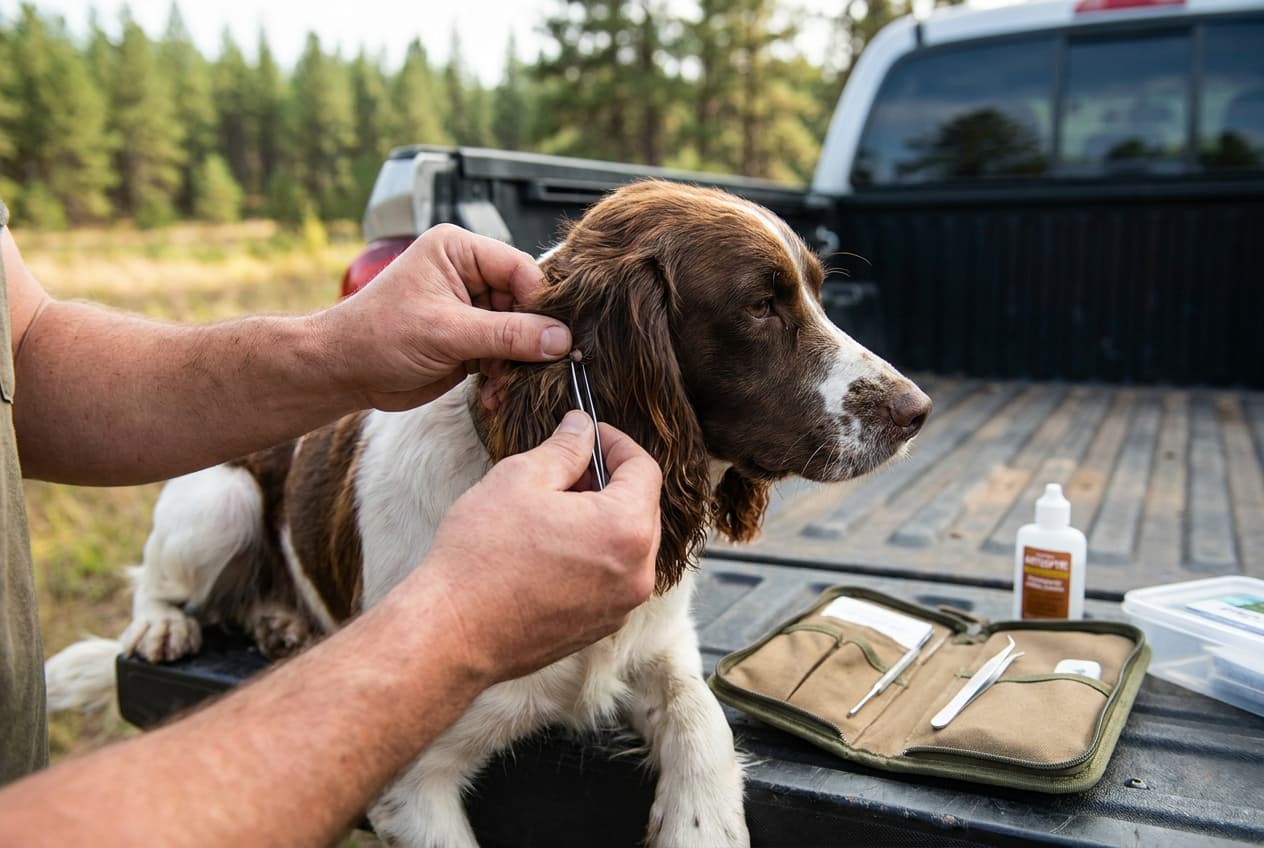

Quick answer: To remove a tick from a dog, part the hair, grab the tick with fine-tipped tweezers as close to the skin as you can, and pull straight out with slow, steady pressure. Don’t twist, squeeze the body, or smother it with Vaseline, a match or oils. Clean the bite, wash your hands, and save the tick in a sealed bag with the date. Blacklegged ticks usually need 24 to 48 hours attached to pass Lyme bacteria, so same-day removal after a hunt really matters.
Every hunting dog owner pulls ticks. The difference between a good job and a bad one is whether the mouthparts come out clean and whether you crush infected fluid back into the bite. Here’s how to do it right in the truck, at camp, or on the kennel floor.
Step by step: how to remove a tick from your dog
- Keep the dog still. Have a partner hold the dog, or have it lie on its side. Good light helps. A headlamp is your best tool at camp.
- Part the coat so you can see where the tick’s head enters the skin. On double-coated retrievers and setters, wetting the hair slightly helps.
- Grip at skin level. Use fine-tipped tweezers or a tick hook to grab the tick’s head and mouthparts as close to the skin as possible, not the swollen body.
- Pull straight out with slow, steady pressure. The Companion Animal Parasite Council recommends “slow, steady, rearward pressure.” Don’t jerk or twist with tweezers. If you’re using a hook-style tool, follow its directions.
- Check the bite. If a tiny black piece stays in the skin, don’t dig. It usually works its way out, and digging causes more irritation.
- Clean up. Wipe the bite with an antiseptic wipe or soap and water, then wash your hands.
- Save the tick. Drop it into a small zip bag or pill bottle with a little rubbing alcohol, and write the date and where you hunted. If your dog gets sick later, that tells your vet which diseases to test for. Wisconsin hunters can use the University of Wisconsin’s tick identification and removal resources.
What not to do
- Don’t smother the tick with petroleum jelly, nail polish, dish soap or essential oils. The CDC’s tick-bite guidance recommends taking ticks off as quickly as possible, not waiting for them to back out.
- Don’t burn it with a match or lighter, especially near a dog’s face and coat.
- Don’t squeeze the body. Pinching the swollen belly can push tick fluid into the bite.
- Don’t crush ticks with your bare fingers.
Best tick removal tools for hunting dogs
| Tool | Best for | Pros | Cons |
|---|---|---|---|
| Fine-tipped tweezers | Every tick, every size | Precise, cheap, follows CDC and CAPC advice | Hard to use on a squirming dog |
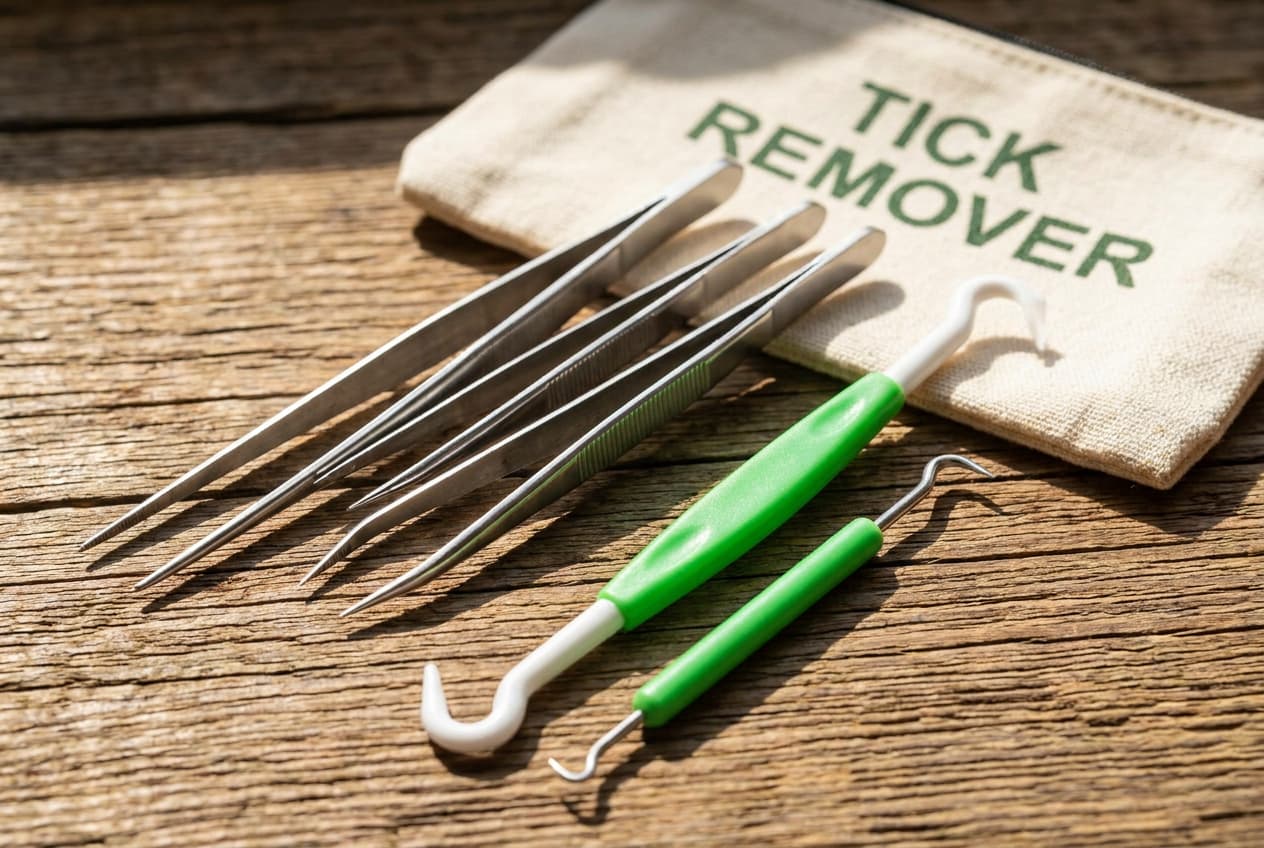
| Tick hook (lever style) | Big engorged ticks, thick coats | Slides under the tick without squeezing the body | Need a couple of sizes for tiny nymphs |
| Tick key / slot tool | Quick removal on short-coated dogs | Fits on a keychain or lanyard | Less precise on nymphs and in long hair |
| Flea and tick comb | Finding loose ticks before they attach | Catches crawling ticks after a hunt | Won’t remove attached ticks |
Where to buy: fine-tipped tick tweezers · tick hooks for dogs · tick keys · flea combs
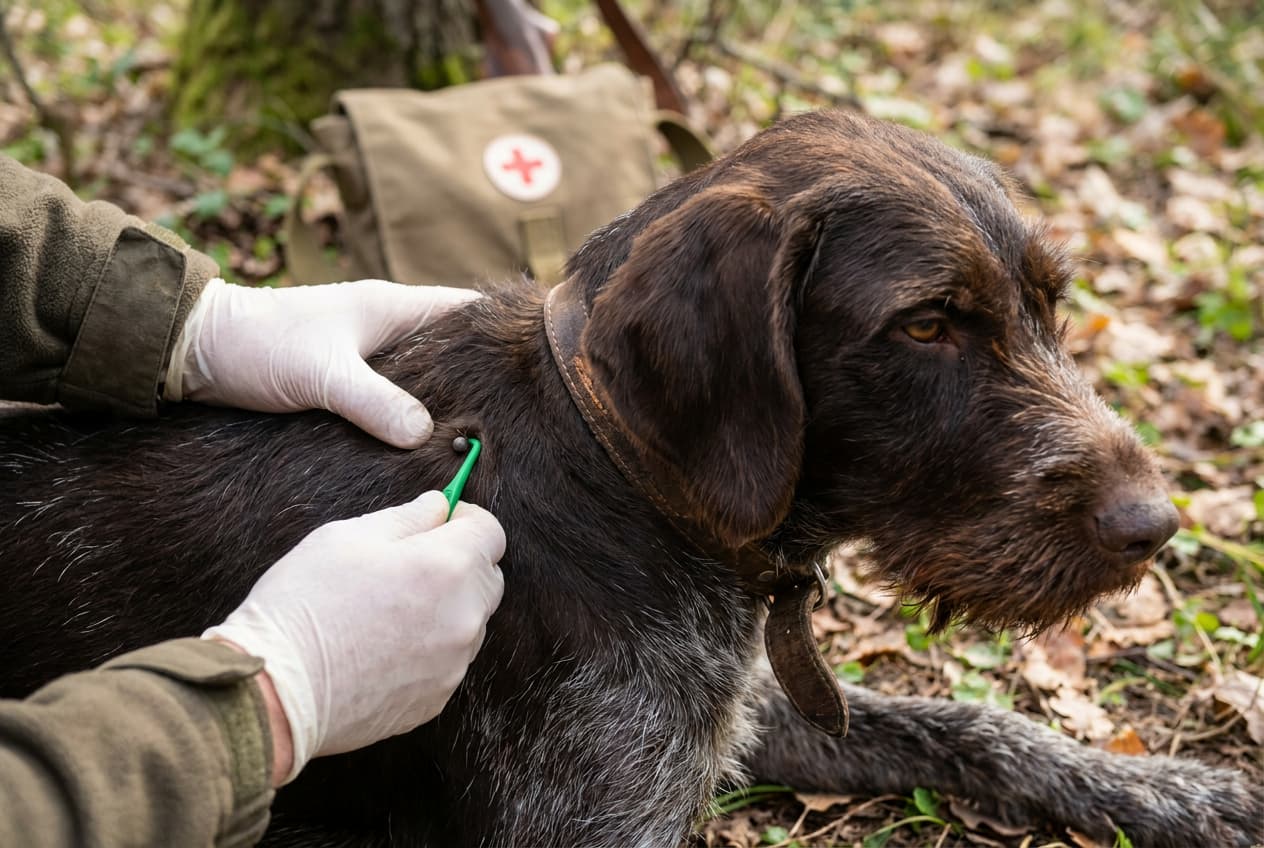
Our pick for the truck: carry both fine-tipped tweezers and a two-size tick hook set. The hook handles fat ticks on a dog’s ears and neck, and the tweezers handle the tiny nymphs you’ll find between toes and in armpits. Keep them in a waterproof bag with antiseptic wipes and zip bags for saving ticks. The rest of the kit is here: hunting dog tick and flea field kit.
Removing ticks from puppies and dogs with sensitive skin
Young pups and some older dogs have thin skin that tears and gets irritated easily. A few changes help:
- Use the smallest hook in the set or the finest-tipped tweezers. Bigger tools pinch more skin.
- Go slower. Steady pressure for several seconds is fine.
- Skip alcohol straight on the bite for young pups. Mild soap and water is gentler.
- Check the spot the next day. A small red bump is normal. Spreading redness, swelling or discharge needs a vet.
Starting a pup on prevention? See flea and tick prevention for hunting dog puppies.
After the tick is out: what to watch for
Most tick bites never cause disease, but watch your dog for the next few weeks, and for months with Lyme disease. Call your vet if you see:
- Fever, lethargy or a dog that won’t eat
- Lameness, especially if it shifts between legs
- Pale gums, bruising or nosebleeds
- Swelling or infection at the bite
Learn the signs of each disease: tick-borne diseases in hunting dogs and Lyme disease in hunting dogs.
Frequently asked questions
What happens if the tick’s head stays in my dog?
Leftover mouthparts usually work their way out within a few days, like a splinter. Don’t dig. Keep the spot clean and call your vet if it swells or oozes.
Should I twist a tick to remove it from my dog?
Not with tweezers. Pull straight out with steady pressure. Some hook-style tools are designed to rotate, so follow the directions for the tool you’re using.
How long does a tick have to be attached to give a dog Lyme disease?
Blacklegged ticks generally need about 24 to 48 hours of feeding to pass Lyme bacteria, which is why checking and removing ticks the same day works so well.
Should I keep the tick after removing it?
Yes. Put it in a sealed bag or pill bottle with a little rubbing alcohol, and label it with the date and location. It helps your vet if your dog gets sick later.
Sources
- Companion Animal Parasite Council: tick guidelines
- CDC: what to do after a tick bite
- University of Wisconsin: tick removal
Last reviewed September 30, 2026. This article is general information for hunting dog owners, not veterinary advice.
Disclosure: HuntingMagazine may earn a commission when you buy through links on this page, at no extra cost to you.