
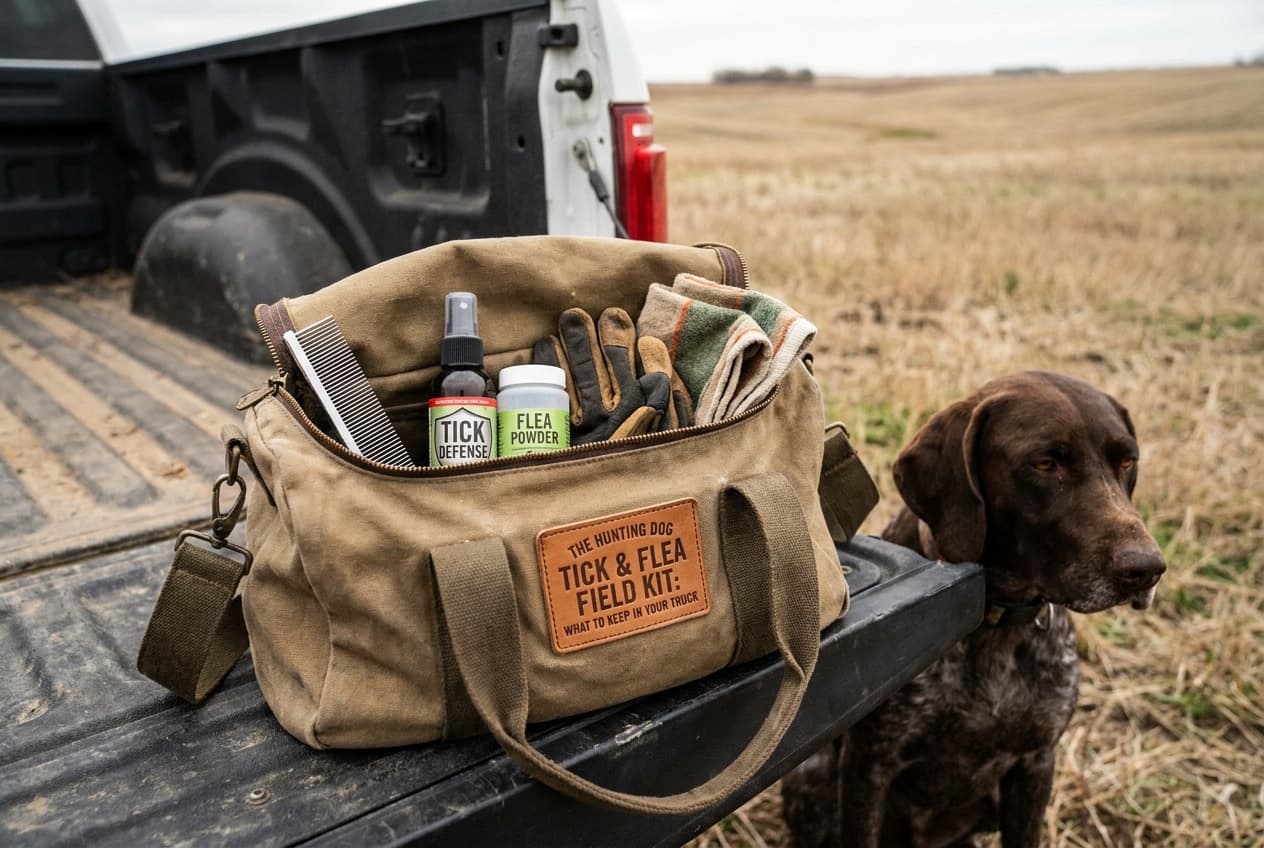

Quick answer: A hunting dog tick and flea field kit should hold fine-tipped tweezers and a tick hook, a metal flea and tick comb, a headlamp, antiseptic wipes, nitrile gloves, small zip bags with a vial of rubbing alcohol for saving ticks, a lint roller, and a note of when your dog’s flea and tick protection is due. Keep it in a waterproof pouch in the truck and use it for a 5-minute check after every hunt.
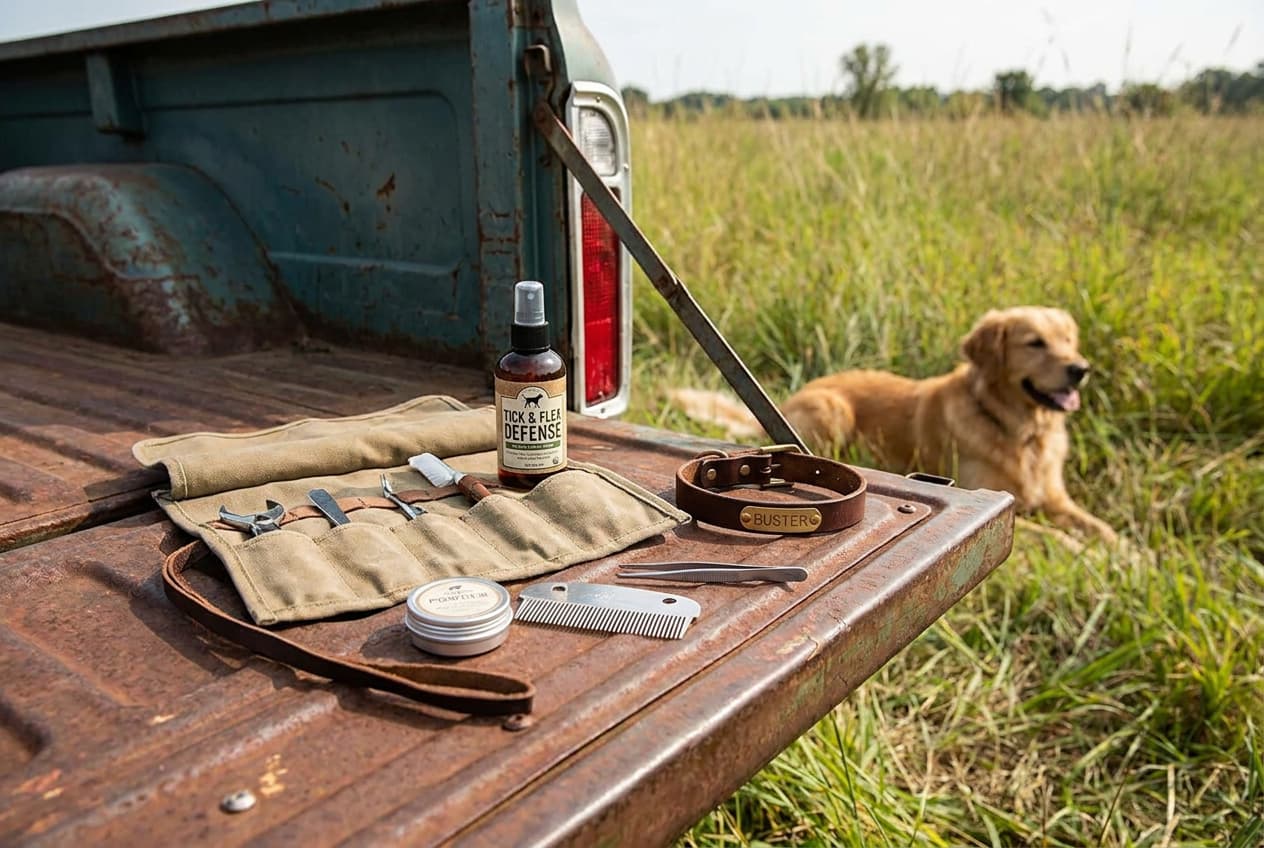
Prevention products do most of the work, but no collar or chew stops every tick from hitching a ride. What you do at the tailgate in the 10 minutes after the hunt decides whether those ticks end up in your truck, your kennel or your house. Here’s the kit we recommend and how to use it.
The field kit checklist
| Item | Why it’s in the kit |
|---|---|
| Fine-tipped tweezers | Pull tiny nymph ticks cleanly at skin level |
| Tick hook (2 sizes) | Lift big, engorged ticks without squeezing them |
| Metal flea and tick comb | Find crawling ticks and fleas in dense or double coats |
| Headlamp | Tick checks happen at dusk, in the truck or at camp |
| Antiseptic wipes | Clean each bite after removal |
| Nitrile gloves | Keep your fingers off ticks and tick fluid |
| Zip bags + small vial of rubbing alcohol + marker | Save ticks with the date and spot, for your vet if the dog gets sick |
| Lint roller | Pick crawling ticks off the dog’s coat, your jacket and the seats |
| Light-colored towel or crate pad | Makes dark ticks easy to spot during the check |
| Prevention schedule card | Product name, date applied and date due, taped inside the pouch |
Shop the kit: tick tweezers · tick hooks · flea and tick combs · waterproof pouches · flea and tick prevention for dogs
The 5-minute tailgate tick check
- Before the dog loads up, run the lint roller over its back and sides to catch loose, crawling ticks.
- Comb the dense spots. Neck, chest, tail and the “pants” on the back legs, against the grain.
- Finger-check the hiding spots: ears and ear flaps, under the collar, armpits, between the toes, groin and under the tail.
- Remove attached ticks right away. Here’s the right technique: how to remove a tick from your hunting dog.
- Bag and label any tick you pull, with the date and the cover or county.
- Check yourself. The same ticks want you too.
Flea combs for double-coated hunting dogs
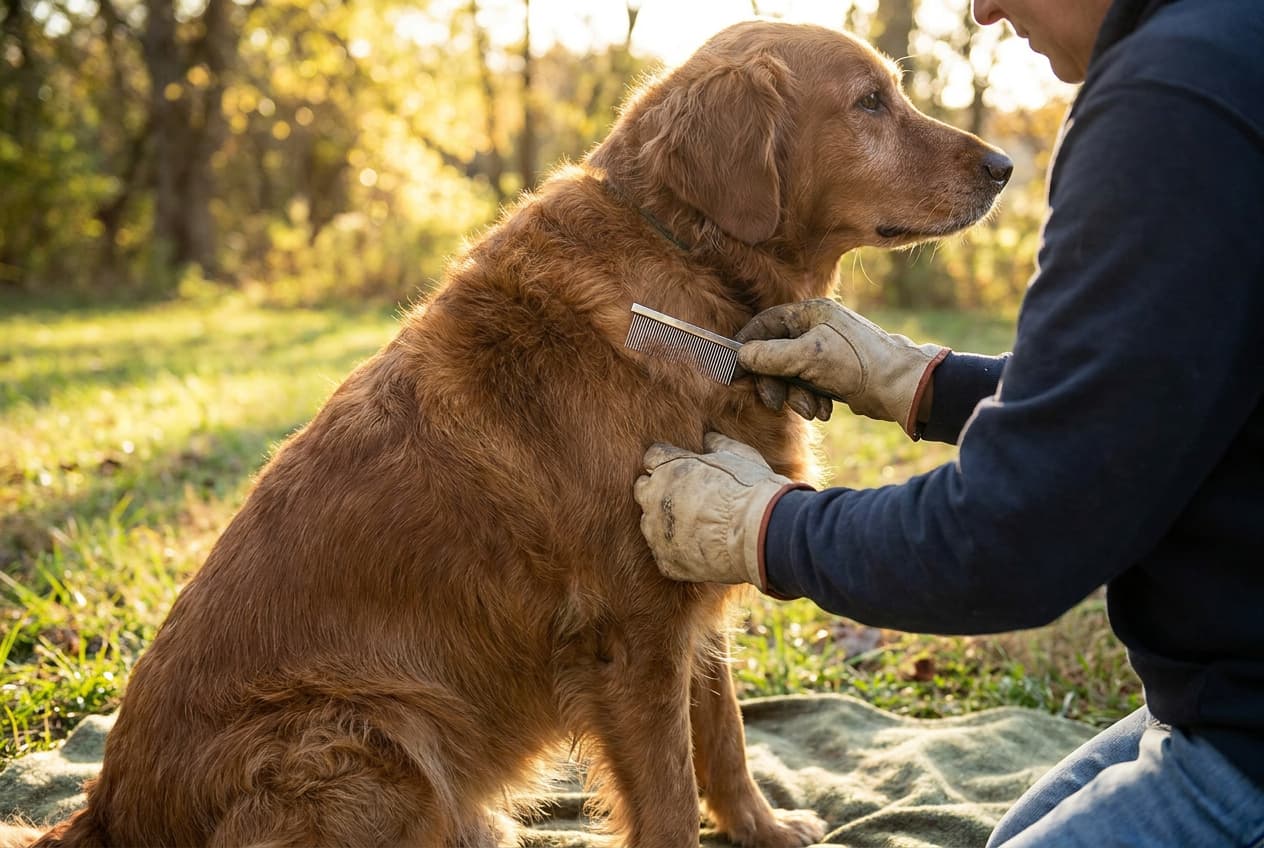
Labs, Goldens, Chessies, setters and spaniels have dense undercoats that hide ticks and fleas. A good comb makes the difference:
- Pick metal teeth that are close together. Plastic flea combs flex and slide over ticks in thick coats.
- Look for a comfortable handle. A contoured grip makes a full-body comb-through easy on your hand at the end of a long day.
- Keep a cup of soapy water nearby at the kennel. Dip the comb to drown fleas you pull out.
- Work in sections from head to tail, lifting the outer coat so the teeth reach the skin.
After a hunt, a flea comb finds crawling ticks. It won’t pull out attached ones. Use tweezers or a hook for those.
Keeping protection working through a wet season
Water dogs spend hours soaked, which affects some products:
- Topicals: many spot-on labels say not to bathe the dog for about 48 hours before and after applying. Plan the application around your hunt schedule.
- Collars: frequent swimming can shorten how long some collars last. The Seresto label, for example, notes reduced protection time for dogs that swim or are bathed more than once a month. Details: Seresto collar for hunting dogs review.
- Oral products: swimming doesn’t affect them, which is one reason duck hunters often prefer them. Ask your vet whether an oral option fits your dog.
Truck and kennel habits that keep ticks out
- Use a light-colored crate pad so ticks stand out, and shake it out after every trip.
- Wash dog bedding in hot water and dry it on high heat regularly during tick season.
- Keep kennel runs mowed short and clear of brush and leaf litter.
- Brown dog ticks can live indoors and in kennels year-round. If you find ticks in the kennel itself, talk to your vet and a pest professional. The Companion Animal Parasite Council covers this in its tick guidelines.
- Treat your own hunting clothes with a permethrin clothing treatment, following the label. The CDC recommends it for preventing tick bites on people. Keep permethrin products away from cats, which are highly sensitive to it.
Frequently asked questions
What should be in a hunting dog tick kit?
Fine-tipped tweezers, a tick hook, a metal flea and tick comb, a headlamp, antiseptic wipes, gloves, zip bags with rubbing alcohol for saving ticks, and a lint roller.
How often should I check my hunting dog for ticks?
After every hunt or training session in grass or brush, before the dog goes into the truck, kennel or house.
Does a flea comb remove ticks?
It catches loose, crawling ticks. Attached ticks need tweezers or a tick hook.
Does swimming wash off flea and tick protection?
It can shorten how long some collars and topicals last. Oral products aren’t affected by water. Check your product label and ask your vet.
Sources
- Companion Animal Parasite Council: tick guidelines
- CDC: tick bites and prevention
- Seresto Large Dog label information
Last reviewed September 30, 2026. General information only. Follow product labels and your veterinarian’s advice.
Related: Best hunting dog collars · Lyme disease in hunting dogs · Tick-borne diseases in hunting dogs
Disclosure: HuntingMagazine may earn a commission when you buy through links on this page, at no extra cost to you.