


Quick answer: Hunting dogs in the U.S. mainly pick up five tick-borne diseases: Lyme disease, anaplasmosis, ehrlichiosis, babesiosis and Rocky Mountain spotted fever. Most cause the same early signs: fever, lethargy, poor appetite and lameness. Which one your dog is most likely to get depends on which ticks live where you hunt. A yearly blood screen plus year-round tick control catches or prevents most cases.
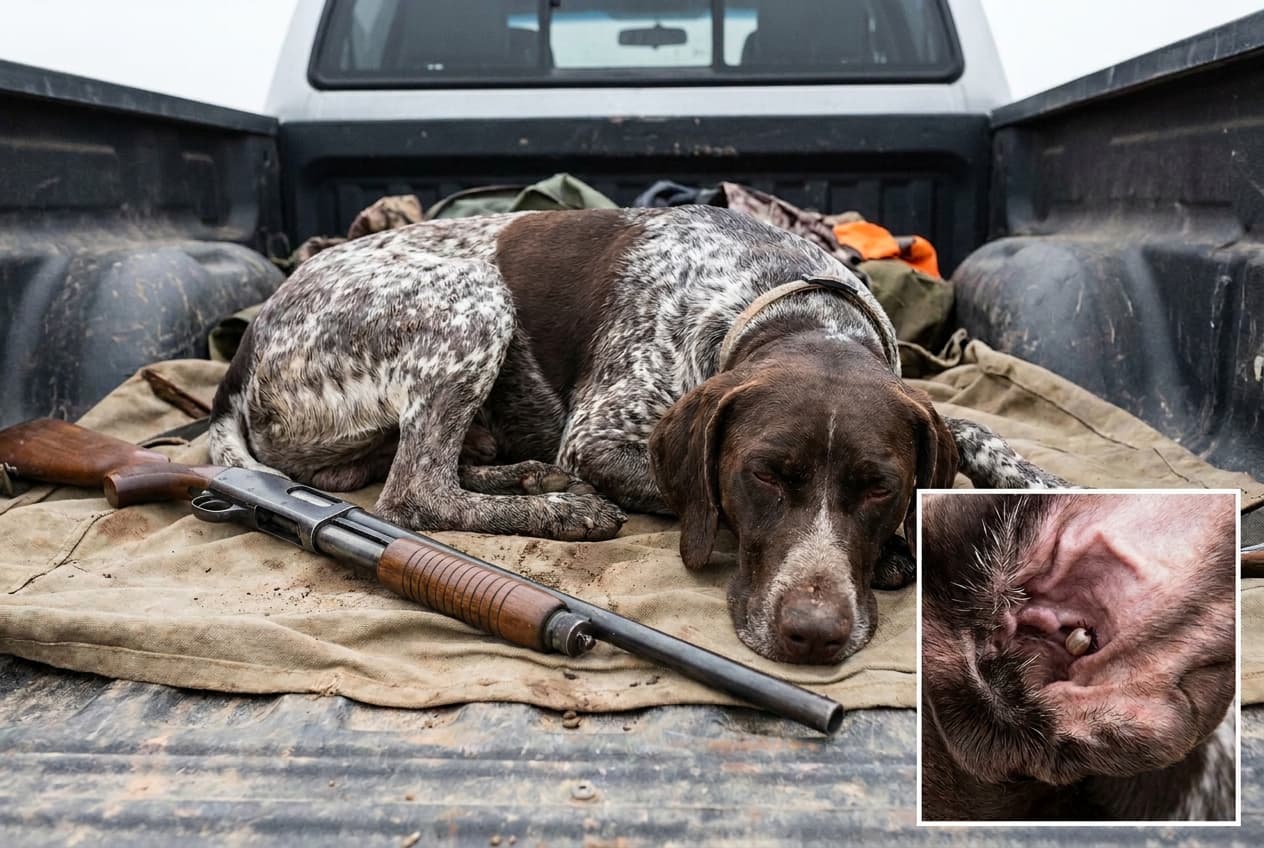
A bird dog that seems “off” a week after a hunt, a retriever that won’t eat, an older hound that’s slower than usual. Owners often chalk these up to a hard weekend or age. Sometimes they’re the first signs of a tick-borne infection. This guide covers each disease, which tick carries it, where it’s common and what it looks like in a working dog.
Tick-borne diseases in dogs at a glance
| Disease | Main tick | Where it’s most common | Common signs in dogs |
|---|---|---|---|
| Lyme disease (Borrelia burgdorferi) | Blacklegged (deer) tick | Upper Midwest, Northeast, Mid-Atlantic, spreading | Shifting-leg lameness, swollen joints, fever. Rarely, kidney disease. |
| Anaplasmosis (Anaplasma phagocytophilum) | Blacklegged tick | Same regions as Lyme; often co-infects | Fever, lethargy, joint pain, poor appetite, low platelets |
| Ehrlichiosis (Ehrlichia canis, E. ewingii) | Brown dog tick, lone star tick | South, South-Central and Eastern U.S.; kennels | Fever, weight loss, bleeding or bruising, lameness (E. ewingii) |
| Babesiosis (Babesia species) | Brown dog tick, blacklegged tick | Scattered; also spread by dog bites and fights | Pale gums, weakness, dark urine (anemia) |
| Rocky Mountain spotted fever (Rickettsia rickettsii) | American dog tick, others | Southeast, South-Central, parts of the West | Sudden fever, pain, lethargy. Can be severe. |
The Companion Animal Parasite Council lists which diseases each tick carries in its tick guidelines. Its parasite prevalence maps show positive test rates in dogs by county.
Lyme disease
This is the one most hunters know. Only about 5% to 10% of infected dogs get sick, usually 2 to 5 months after the bite. The hallmark is lameness that moves from leg to leg. Full guide: Lyme disease in hunting dogs.
Anaplasmosis: Lyme’s partner in the North Woods
Anaplasmosis is carried by the same blacklegged ticks that carry Lyme. It’s common in exactly the places Upper Midwest bird hunters spend October: aspen and alder cover in Minnesota and Wisconsin. Signs usually appear within 1 to 2 weeks of infection, much faster than Lyme. Watch for fever, a dog that won’t get up, joint pain and poor appetite. Some dogs show bruising or nosebleeds from low platelets. Vets usually treat it with doxycycline. The Merck Veterinary Manual has the clinical details.
Ehrlichiosis: the kennel and southern-hunt risk
Ehrlichia canis spreads through the brown dog tick, the one tick that can infest kennels and houses. Ehrlichia ewingii comes from the lone star tick, which has been spreading north and east. Hunters who travel south for quail, run hounds, or board dogs in shared kennels should pay attention to this one. Acute signs include fever, lethargy and poor appetite. A chronic form can cause weight loss, bleeding problems and eye disease months later. Details: Merck Veterinary Manual: ehrlichiosis in dogs.
Babesiosis: watch the gums
Babesia parasites destroy red blood cells. The warning signs are pale or white gums, weakness, a fast heartbeat and dark, tea-colored urine. Some Babesia species also spread through bite wounds, which matters for hog-hunting dogs and hounds that fight. Pale gums in a dog that has been in tick country is a same-day vet visit.
Rocky Mountain spotted fever
This one hits fast. Signs can show within days of a bite: high fever, painful muscles and joints, and lethargy. Get your dog seen quickly, because early treatment makes a big difference. American dog ticks, the big brown ticks you pick off in spring and early summer, are one of the main carriers.
Older hunting dogs: when “slowing down” isn’t just age
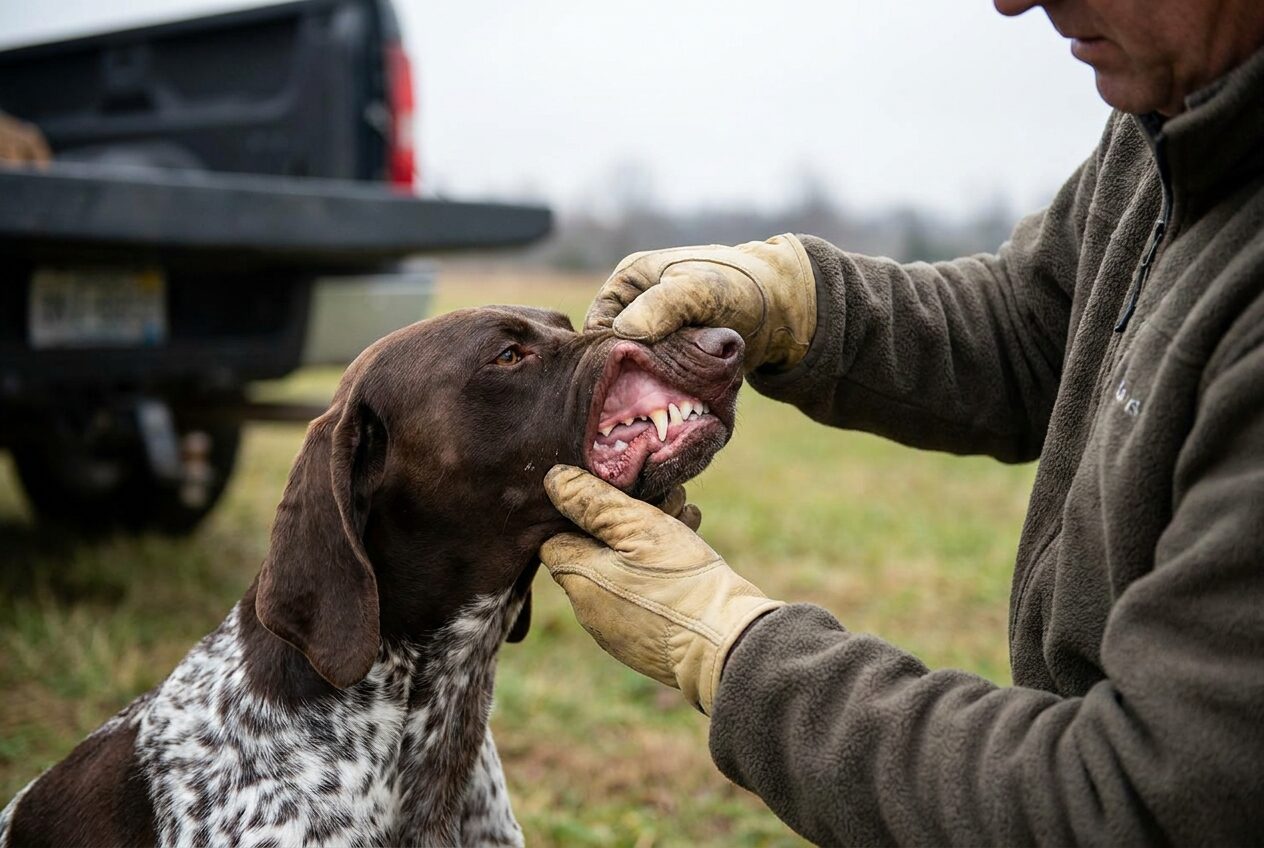
A 9-year-old setter that lags behind, sleeps more and eats less often gets written off as old. But tick-borne infections can look exactly like aging, and older dogs are less able to bounce back. Get a tick-disease screen if an older dog shows any of these:
- A sudden drop in stamina over a few weeks rather than a gradual slowdown
- Stiffness that moves between legs
- Drinking and urinating more (possible kidney involvement)
- Pale gums, nosebleeds or unexplained bruising
More on caring for veterans: flea and tick care for senior hunting dogs.
Testing: the yearly screen every hunting dog should get
Most vets offer a quick in-clinic blood test that checks for heartworm, Lyme, Anaplasma and Ehrlichia at the same time. For hunting dogs, a good schedule is:
- Every year, ideally in late winter or spring after the fall season.
- Anytime your dog has fever, lameness, lethargy or pale gums after tick exposure. Tell your vet exactly where you hunted.
- Before breeding or before a long trip to a different region.
Prevention that works in the field
- Year-round tick control labeled for the ticks where you hunt. The CAPC recommends continuous, not seasonal, protection.
- A tick check after every hunt, before the dog goes into the kennel, truck box or house.
- Same-day tick removal with tweezers or a tick hook: step-by-step guide.
- Kennel hygiene, especially against brown dog ticks, which can live indoors year-round.
- A field kit in the truck: what to pack.
Frequently asked questions
What is the most common tick disease in hunting dogs?
It depends on region. In the Upper Midwest and Northeast, Lyme disease and anaplasmosis lead, and both come from blacklegged ticks. In the South and South-Central states, ehrlichiosis is more common.
How fast do tick-borne disease symptoms appear in dogs?
Anaplasmosis and Rocky Mountain spotted fever can show within days to 2 weeks. Lyme disease usually takes 2 to 5 months.
Can a dog have more than one tick disease at once?
Yes. Blacklegged ticks can carry both Lyme and Anaplasma, and co-infections are common.
Are tick diseases in dogs treatable?
Most are, especially when caught early. Lyme, anaplasmosis, ehrlichiosis and Rocky Mountain spotted fever are usually treated with doxycycline. Babesiosis needs different drugs.
Sources
- Companion Animal Parasite Council: tick guidelines
- Merck Veterinary Manual: anaplasmosis in dogs
- Merck Veterinary Manual: ehrlichiosis in dogs
- CAPC parasite prevalence maps
Last reviewed September 30, 2026. This article is general information for hunting dog owners, not veterinary advice. See your veterinarian for diagnosis and treatment.