


Quick answer: Lyme disease in hunting dogs is caused by Borrelia burgdorferi bacteria, passed by blacklegged (deer) ticks that stay attached for roughly 24 to 48 hours. Only about 5% to 10% of infected dogs get sick, usually 2 to 5 months after the bite. The classic sign is lameness that shifts from one leg to another, often a back leg, along with fever and low energy. A vet treats it with about 30 days of antibiotics, most often doxycycline.
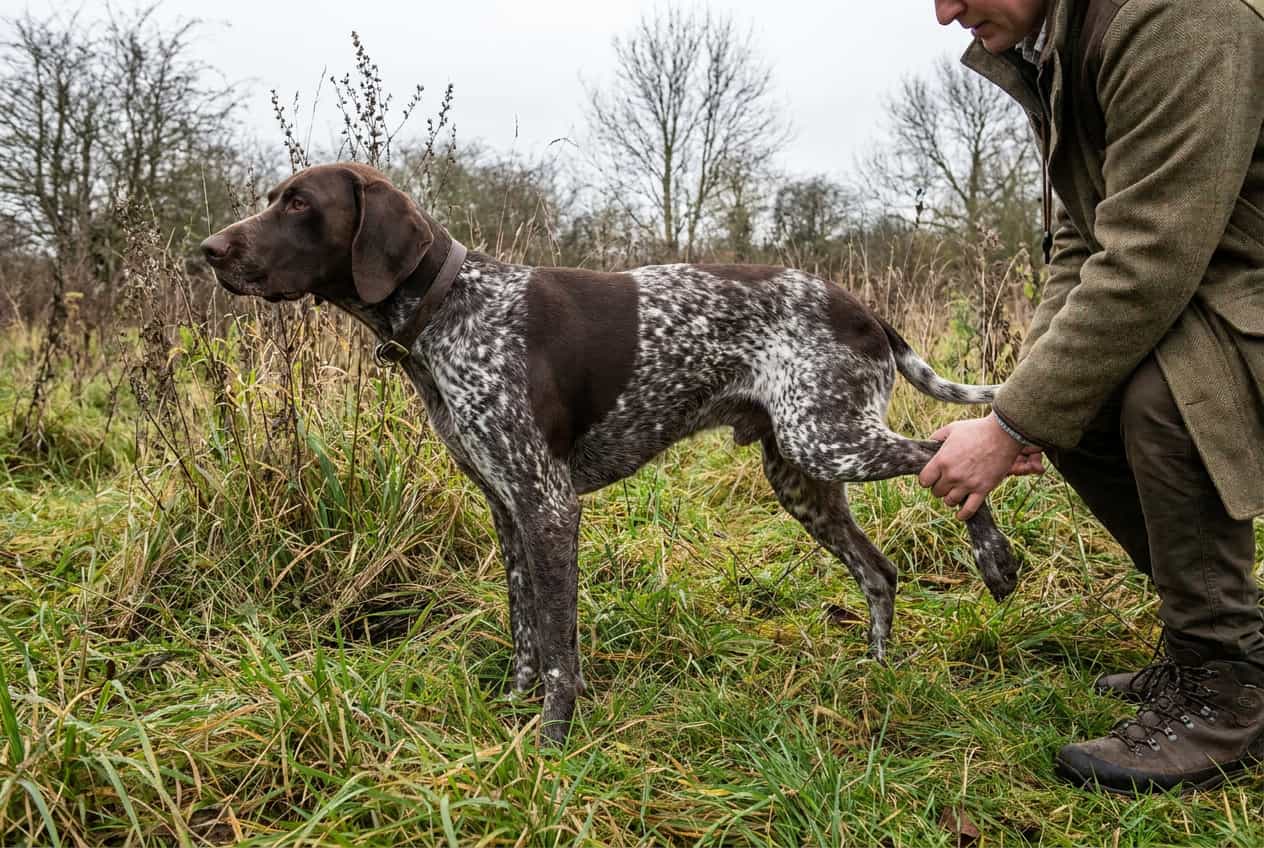
If you run a bird dog through grouse and woodcock cover, work a retriever in cattail marsh, or let your hound push brush all fall, your dog is in blacklegged tick habitat for months at a time. Adult deer ticks are most active in fall, which is right when hunting seasons open. Across Minnesota, Wisconsin, the rest of the Upper Midwest and the Northeast, that overlap makes Lyme disease one of the most common health problems hunting dogs face.
This guide covers what Lyme disease does to a dog, why it so often shows up as trouble in the back legs, how vets test and treat it, and the post-hunt routine that stops most infections before they start.
Lyme disease in dogs: the key facts
- Cause: Borrelia burgdorferi bacteria, carried by blacklegged ticks (Ixodes scapularis in the East and Midwest).
- Transmission window: a tick generally has to feed for about 24 to 48 hours before it can pass the bacteria on. Removing ticks the same day matters (CAPC).
- How many dogs get sick: only about 5% to 10% of infected dogs develop signs of illness (AVMA).
- When signs appear: typically 2 to 5 months after infection, so a dog bitten during an October hunt may not limp until winter.
- Standard treatment: about a 30-day course of antibiotics, most often doxycycline.
- Serious complication: about 1% to 5% of infected dogs develop Lyme nephritis, a kidney disease that can be fatal.
- People: dogs cannot give Lyme disease directly to people, but a dog can carry ticks into the truck, kennel or house.
Why hunting dogs are at higher risk
Blacklegged ticks wait on grass, brush and leaf litter and grab onto whatever brushes past, a behavior called “questing.” A pointer quartering an aspen cut or a Lab pushing through cattails brushes past thousands of those spots in one day. Three things stack the odds against a working dog:
- Timing. Adult blacklegged ticks are active in fall and can stay active on warm days through early winter, overlapping ruffed grouse, woodcock, pheasant and waterfowl seasons.
- Habitat. Young forest, field edges and brushy creek bottoms hold both deer and ticks. That’s also where the birds are.
- Coat. Dense or double coats on retrievers, setters and spaniels hide a tick the size of a sesame seed very well.
Want to see the risk where you hunt? The Companion Animal Parasite Council publishes county-level maps of positive Lyme tests in dogs and an annual parasite forecast. Check your home county and the counties you travel to.
Why Lyme disease so often shows up in the back legs
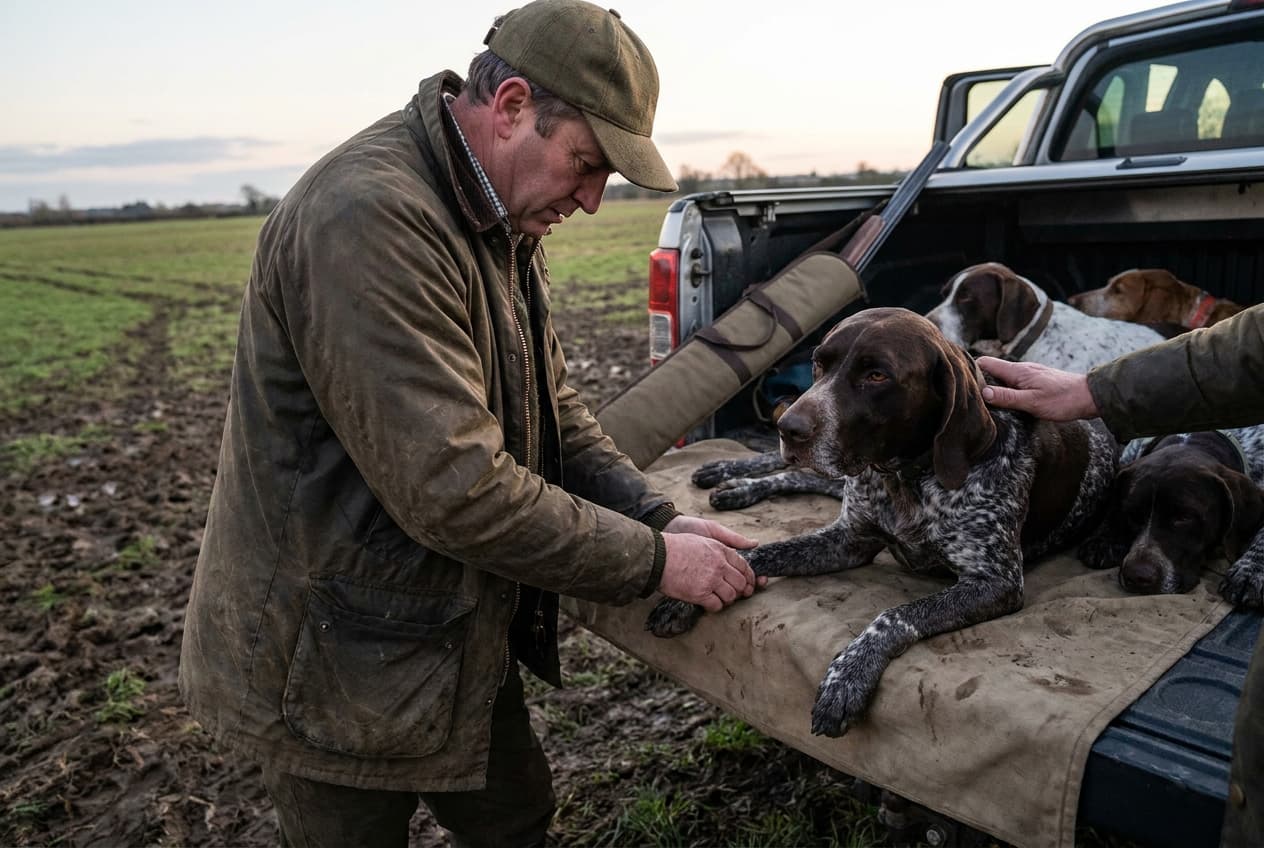
The bacteria settle in and inflame the joints, a condition called polyarthritis. The textbook pattern is shifting-leg lameness: the dog favors a back leg one day and a front leg a few days later. Because a hunting dog’s hind legs do most of the driving in a hard run, owners usually notice the problem there first. It looks like a dog that suddenly can’t jump into the truck, stiffens up after lying down, or refuses to push through heavy cover.
Don’t write it off as a pulled muscle from the weekend hunt. A soft-tissue strain usually stays in one leg and slowly improves. Lameness that moves between legs, comes with a fever, or keeps coming back is the time to ask your vet about a tick-disease test.
Symptoms of Lyme disease in dogs
| Stage | What you may see | What to do |
|---|---|---|
| Early / acute | Shifting-leg lameness, warm or swollen joints, fever, lethargy, poor appetite, swollen lymph nodes | Book a vet visit and mention tick exposure and where you hunted |
| Recurring | Lameness that comes and goes over weeks or months, stiffness after rest | Ask about a tick-borne disease test and a joint exam |
| Kidney (Lyme nephritis) | Vomiting, weight loss, drinking and urinating more, swelling from fluid build-up | Emergency. See a vet the same day. |
Most dogs exposed to Lyme bacteria never get sick. That’s why a positive test by itself doesn’t always mean treatment. Your vet looks at the whole picture.
How vets test hunting dogs for Lyme disease
Most clinics use an in-house blood screen that checks for antibodies against the Borrelia C6 protein, often as part of a combined test that also covers heartworm, Anaplasma and Ehrlichia. The C6 test can tell natural infection apart from vaccination. Antibodies usually show up about 4 to 6 weeks after infection, so a test taken the week after a bite can come back negative.
A good routine for hunting dogs: screen every year, ideally in late winter or spring after the fall season. If your dog tests positive, ask whether a urine protein check is recommended to watch the kidneys.
Treatment and recovery
- Antibiotics: doxycycline for about 30 days is the standard. Dogs with kidney involvement may need longer treatment and extra care.
- Joint pain: many dogs with Lyme-related lameness feel better within a few days of starting treatment. Finish the full course anyway.
- Back to the field: ask your vet how soon your dog can return to hard work. Dogs coming back from joint inflammation do best with a gradual build-up of conditioning.
- Reinfection: a past infection doesn’t make a dog immune. Keep up prevention after treatment.
How to prevent Lyme disease in a hunting dog
- Use a tick product year-round that is labeled for blacklegged ticks. That can be a collar, a topical or an oral product. The Companion Animal Parasite Council recommends year-round control rather than seasonal. See our reviews of the Seresto collar for hunting dogs and the Amazon Basics topical for large dogs.
- Ask about the Lyme vaccine if you live or hunt where Lyme is common. It needs a booster 2 to 4 weeks after the first shot, then yearly.
- Check your dog after every hunt, before it goes in the kennel or the house. It takes 5 minutes and it’s the most effective habit on this list.
- Remove ticks the right way with fine tweezers or a tick hook. Step by step: how to remove a tick from your hunting dog.
- Keep a kit in the truck. Here’s what to pack: the hunting dog tick and flea field kit.
The 5-minute post-hunt tick check
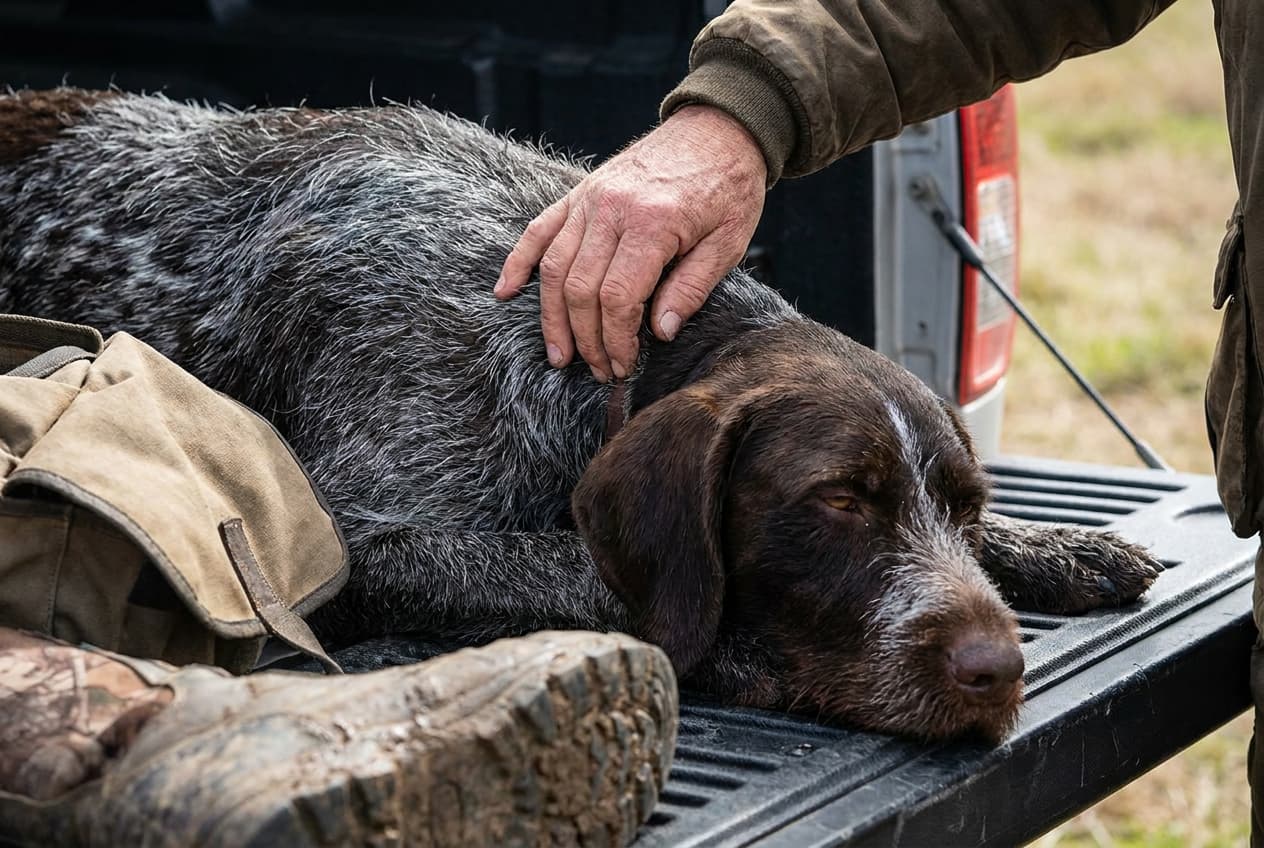
Run your fingers against the grain of the coat. Ticks feel like small hard bumps. Check these spots in order:
- Around the ears, inside the ear flaps, and the head and muzzle
- Under the collar and along the neck
- Armpits and the inside of the front legs
- Between the toes and around the pads
- Groin, belly and the inside of the back legs
- Under the tail and around the tail base
Other tick diseases hunting dogs pick up
Blacklegged ticks can also carry Anaplasma, and other ticks carry Ehrlichia and Babesia. These diseases cause fever, lethargy and lameness that look a lot like Lyme. A dog can carry more than one at a time. Read our guide to tick-borne diseases in hunting dogs for what each one looks like and where it’s found.
Frequently asked questions
Can my hunting dog give me Lyme disease?
No. Lyme disease does not spread directly from dogs to people. But ticks that ride home on your dog can move onto you, so check yourself after the hunt too.
How long after a tick bite do Lyme symptoms show in dogs?
Usually 2 to 5 months. A dog bitten during October bird season might not show lameness until December or later.
Should I vaccinate my bird dog for Lyme disease?
If you live or hunt where Lyme is common, including much of Minnesota, Wisconsin and the Northeast, the vaccine is worth discussing with your vet. It works alongside tick control, not in place of it.
Can a dog get Lyme disease more than once?
Yes. A past infection doesn’t guarantee immunity, so keep using tick prevention after treatment.
Does a positive Lyme test mean my dog needs antibiotics?
Not always. Most exposed dogs never get sick. Your vet will weigh symptoms, a urine protein test and exam findings before deciding.
Sources
- American Veterinary Medical Association: Lyme disease in dogs
- Companion Animal Parasite Council: Lyme disease guidelines
- Merck Veterinary Manual: Lyme disease in dogs
- CAPC parasite prevalence maps
Last reviewed September 30, 2026. This article is general information for hunting dog owners, not veterinary advice. Always confirm diagnosis, treatment and prevention choices with your veterinarian.
More for hunting dog owners: Best bird dog breeds · Should hunting dogs be kept outside? · Flea and tick care for senior hunting dogs