
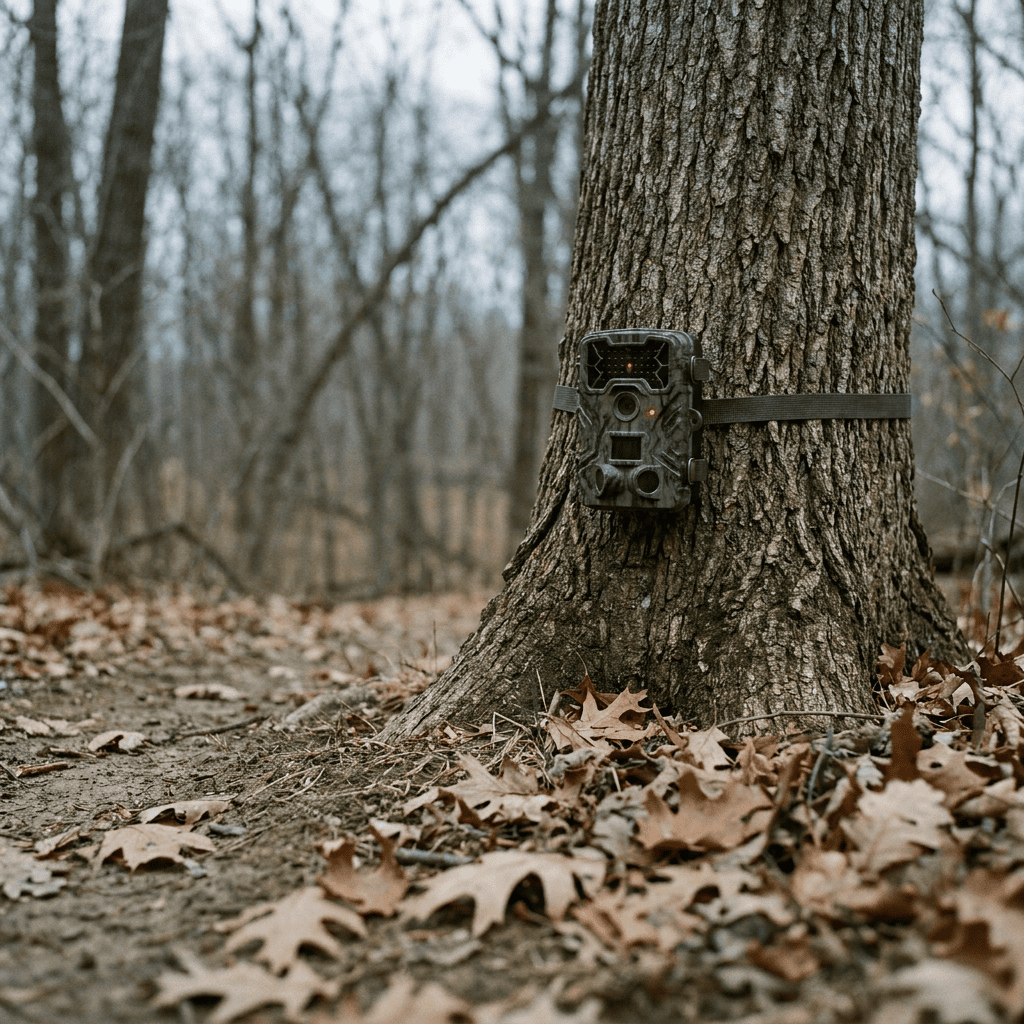

Best Trail Camera Buying Guide
We evaluated these trail cameras on the factors that actually matter for deer season: trigger speed, image resolution, night image quality, cellular reliability, battery life, and weatherproofing, then weighed that against price and verified customer ratings. Every camera here has enough review volume and rating strength to trust for a real hunting season, not just a backyard test.

TACTACAM Reveal X 3.0 Cellular Trail Camera, Night Vision, Waterproof
Best overall cellular camera for serious deer hunters
What We Liked
- 4K photo and 1080p video quality good enough to judge antler score from a distance
- Auto-connect multi-carrier LTE means no fumbling with SIM cards or checking signal maps
- 6+ month battery life and IP66 waterproofing hold up through a full season unattended
Worth Knowing
- Cellular data plan required for remote photo delivery, adding an ongoing cost
- Higher upfront price than non-cellular options
The Reveal X 3.0 is built for hunters who scout multiple properties or can’t check cameras every week. Auto-connect multi-carrier LTE means it finds signal on its own rather than forcing you to guess which carrier works on a given ridge, and the no-SD-card setup keeps your hands off the camera once it’s strapped to a tree. That matters most during the rut, when repeated intrusions into a bedding area can push mature bucks nocturnal.
At 4K photo and 1080p video, image quality is sharp enough to count points and judge body maturity on trail photos alone, which is the whole point of running a camera on a target buck. Six-plus months of battery life and an IP66 rating mean it’s realistic to hang this in August and not touch it again until you’re pulling your stand in January.
4.4 / 5
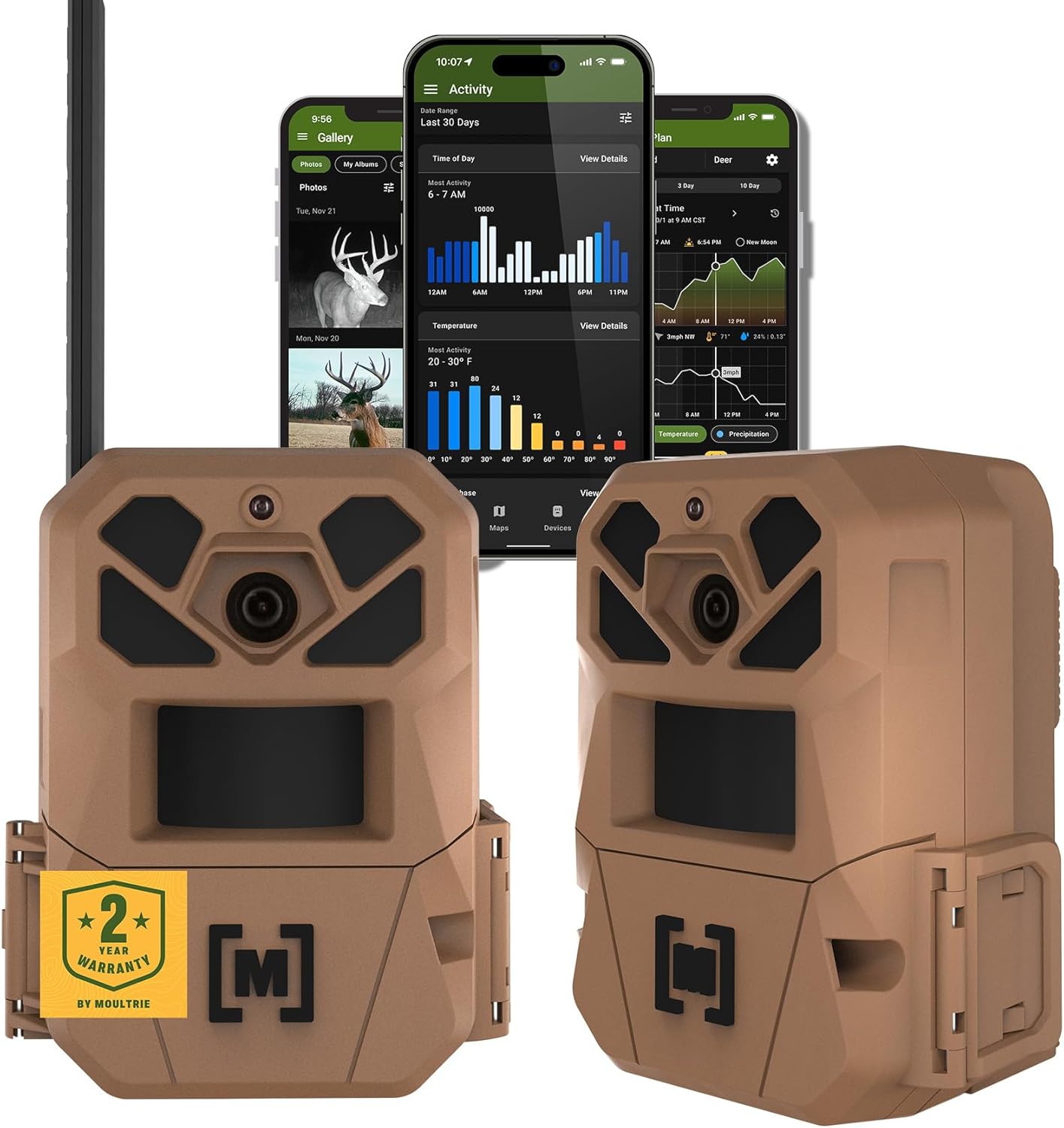
Moultrie Edge 3 Cellular Trail Camera – 2-Pack, 40MP, 0.5s Trigger
Best value for covering multiple stand locations
What We Liked
- Comes as a 2-pack, letting you cover two stand sites for roughly one camera’s price elsewhere
- 40MP resolution captures fine detail on antlers and coat condition
- 0.5-second trigger speed reduces missed shots on deer moving through fast
Worth Knowing
- Fewer verified reviews than the other picks, so long-term reliability data is thinner
- Cellular plan and setup steps needed per camera, doubling the account management
The Edge 3 2-pack is the pick for hunters running more than one property or wanting a camera on both the food source and the travel corridor without buying two premium units separately. A 0.5-second trigger speed is fast enough to catch deer walking a trail rather than just the tail end of a photo, which is where a lot of budget cameras fall short during daylight movement windows.
At 40MP, image detail holds up well for scoring bucks and identifying individual deer across a season, putting it in the same resolution class as much pricier single-unit cameras. The trade-off is a smaller review base to lean on, so it’s worth treating this as a strong value bet backed by Moultrie’s established cellular camera lineup rather than a fully proven long-term performer.
4.3 / 5

GardePro E5S Trail Camera, 64MP Photo & 1296P HD Video
Best budget non-cellular camera for tight-radius scouting
What We Liked
- 64MP photo resolution is the highest in this lineup, even without cellular connectivity
- 1296P HD video adds useful behavior context beyond still photos
- Lowest price point of the three, easing the cost of running several cameras
Worth Knowing
- No cellular connectivity means physically pulling the SD card to check photos
- Higher-resolution files fill SD cards faster, requiring more frequent checks or larger cards
The E5S makes sense for hunters who scout land they can check in person regularly, or who want to run four or five cameras across a property without stacking multiple cellular data plans on top of hardware costs. At 64MP, still image detail is genuinely excellent, and 1296P video gives a clearer read on deer behavior at a scrape or feeder than a still photo alone.
The catch is the lack of cellular connectivity: every check means walking in and pulling the card, which reintroduces the human scent and pressure that cellular cameras are designed to avoid near bedding areas. It’s the right trade for close-to-home stands or properties visited often anyway, but not the right choice for a camera on a remote honey hole you only want to visit at pull time.
4.4 / 5
Pick the Reveal X 3.0 if you hunt a remote property, can’t check cameras weekly, or you’re monitoring a specific target buck where minimizing intrusion matters most. Pick the Edge 3 if you need cellular coverage on two stand locations and want to split the cost of a premium camera setup across a 2-pack. Pick the E5S if you’re building out a multi-camera grid on land you visit often, want the sharpest still-image resolution here, and don’t want recurring cellular fees on every unit.
Common Questions
Do I need a cellular trail camera for deer hunting, or is SD card only fine?
Cellular cameras like the Reveal X 3.0 or Edge 3 are worth it if checking the camera in person would spook deer off a bedding area or food source. If you’re running cameras on land you drive by regularly, an SD-card camera like the E5S saves money without the tradeoff.
What trigger speed do I actually need for deer?
Anything at or under 0.5 seconds, like the Edge 3, reliably catches deer walking a trail rather than just their back half. Slower trigger speeds are more likely to miss fast-moving deer, especially during daylight rut activity.
How much photo resolution do I need to score a buck from trail cam photos?
20MP is usually enough to count points at typical camera distances, but 40-64MP cameras like the Edge 3 and E5S give more room to crop in and judge mass or brow tine length on deer photographed further from the lens.
How long will a trail camera battery last during hunting season?
The Reveal X 3.0 is rated for 6+ months on a set of batteries, which typically covers a full pre-season through late-season run without a battery swap. Non-cellular cameras like the E5S often last even longer since they aren’t transmitting data, but you’ll be swapping the SD card more often anyway.
Is a 2-pack camera like the Edge 3 better value than one premium camera?
If you need coverage on two separate stand sites, yes, the Edge 3 2-pack effectively halves your per-camera cost. If you only need one camera and want the single most capable unit, the Reveal X 3.0’s individual feature set is stronger per camera.