
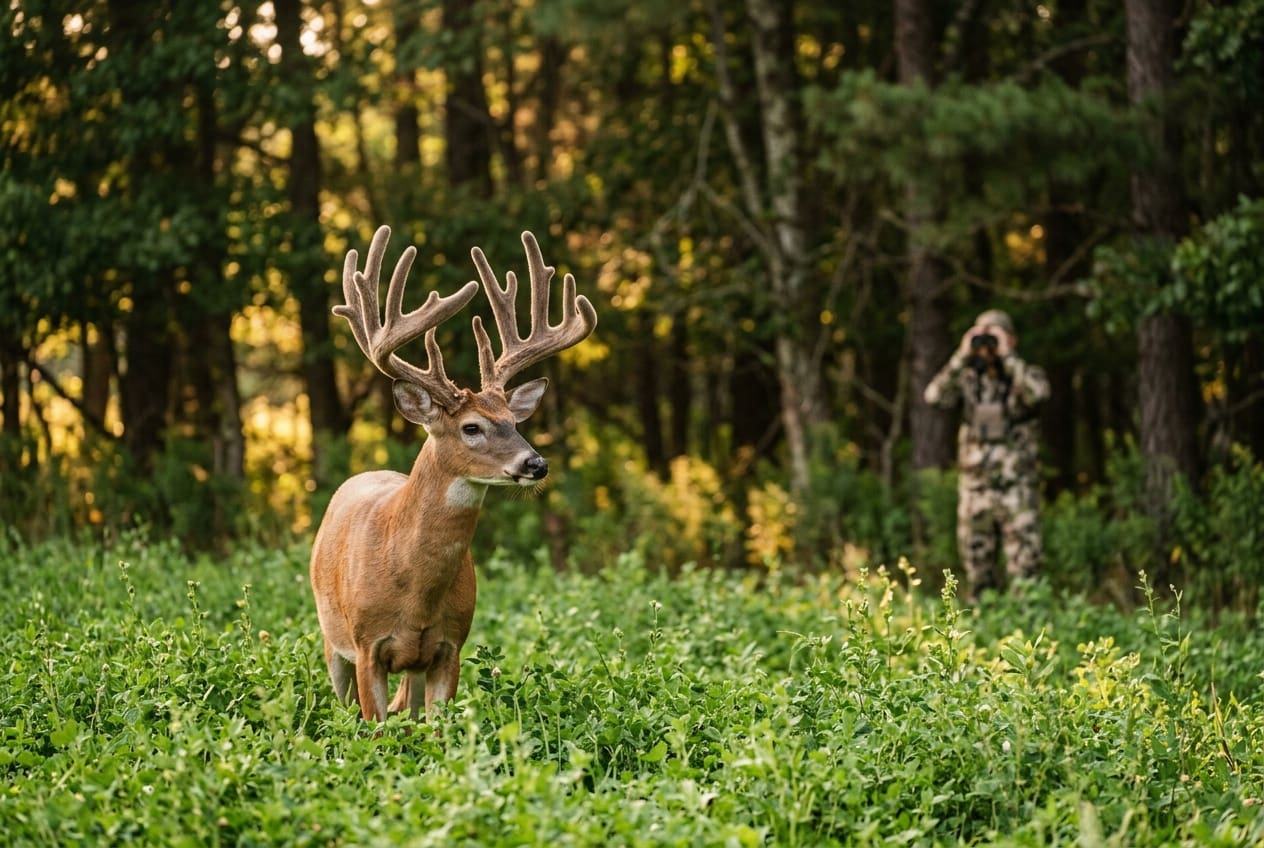

How to Scout Velvet Bucks in Late Spring 2026
Velvet buck scouting during late spring offers hunters the best opportunity to inventory mature deer and establish early patterns before hunting season. Bucks are predictable, visible, and actively feeding in open areas while their antlers are in full velvet growth mode. This critical scouting window from late May through July provides invaluable intelligence for fall hunting success.
What makes late spring the best time for velvet buck scouting?
Late spring presents ideal conditions because bucks are not yet pressured by hunting activity and maintain consistent daily routines. Their bachelor group behavior and frequent daylight movement make them highly visible and predictable during this period.
Testosterone levels remain low through summer, keeping bucks tolerant of each other and focused on feeding rather than territorial disputes. This creates extended observation windows where multiple mature bucks can be spotted together in food sources.
Where should you focus your velvet buck scouting efforts?
[[BODY_IMAGE_1]]
Agricultural food sources like soybeans, alfalfa, and clover fields draw the most consistent velvet buck activity during late spring and early summer. These high-protein food sources support antler development and attract bachelor groups regularly.
Focus on field edges adjacent to thick cover where bucks feel secure transitioning between bedding and feeding areas. The USDA Natural Resources Conservation Service emphasizes how edge habitat creates prime wildlife corridors that deer utilize daily for movement patterns.
[[BODY_IMAGE_1]]
How do you set up trail cameras for velvet buck inventory?
Position trail cameras on established deer trails 15-20 yards from field edges where bucks enter food sources. Set cameras 3-4 feet high and angle them slightly downward to capture full body shots that reveal antler development.
- Use time-lapse mode during daylight hours to capture extended feeding sessions
- Program motion activation for dawn and dusk when bachelor groups are most active
- Place cameras facing north to avoid sun glare and overexposed images
- Check cameras every 7-10 days to minimize human scent and disturbance
What signs indicate consistent velvet buck activity?
[[BODY_IMAGE_2]]
Heavy trail systems leading to food sources, large tracks exceeding 3.5 inches, and multiple rub marks on fence posts or trees signal mature buck presence. Fresh droppings in feeding areas and bedding sign in nearby cover confirm regular use patterns.
Pay attention to timing data from trail cameras showing when specific bucks visit food sources. Bachelor groups often maintain schedules within 30-60 minute windows daily. Research from Quality Deer Management Association shows that summer patterns often predict fall hunting opportunities near the same locations.
[[BODY_IMAGE_2]]
Key Takeaways
- Late spring through July offers the most predictable velvet buck observation opportunities
- Agricultural food sources and field edges provide the highest concentration of mature buck activity
- Trail cameras positioned on travel corridors reveal individual buck inventory and timing patterns
- Summer scouting intelligence translates directly to fall hunting location selection and stand placement
Velvet buck scouting during late spring provides hunters with a significant advantage for the upcoming season. The intelligence gathered now about mature buck locations, travel patterns, and daily routines will pay dividends when hunting pressure begins and these deer become nocturnal. Take advantage of this predictable behavior window to build your target buck inventory.