
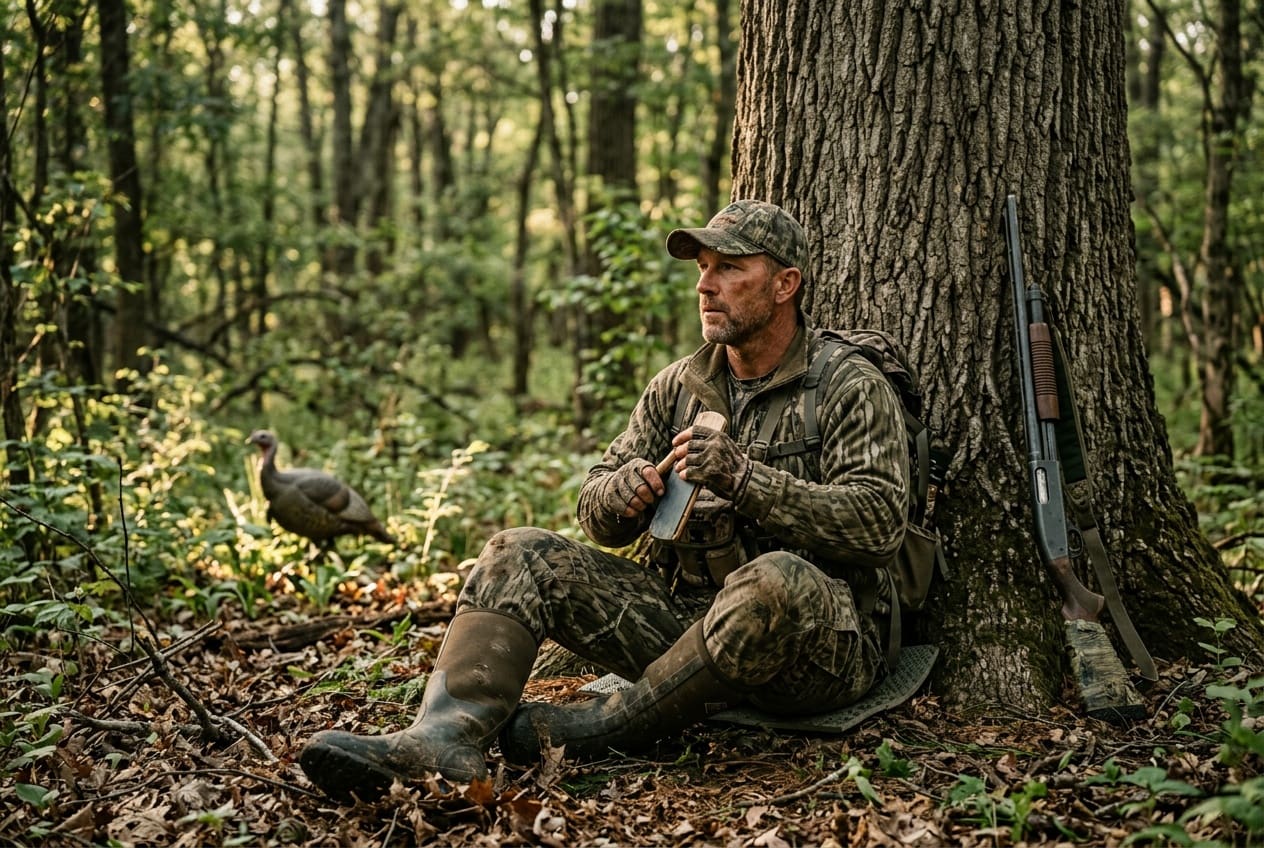

How to Call Pressured Gobblers on Crowded Public Land
Heard that gobbler fire off at first light, worked him for an hour with every call in the vest, and watched him walk the other direction when another hunter started cutting loose from the ridge behind you. If you’ve hunted public land turkeys for more than a season, you’ve lived this frustration. Calling pressured turkeys requires throwing out half of what works on private ground and learning patience most hunters don’t have.
Why Do Pressured Turkeys Stop Responding to Calls?
Pressured gobblers associate aggressive calling with danger because they’ve been hunted hard. They’ve heard every yelp, cut, and purr in the book from hunters who think louder means better.
On heavily hunted public land, a mature tom might encounter five different hunters in a single morning. Each hunter hits him with excited yelping and cutting, teaching that bird to shut up and move away from calling. By mid-May, these gobblers have earned their PhD in hunter avoidance. They’ll gobble once at flydown, then go silent for the rest of the morning.
What’s the Best Calling Strategy for Educated Birds?
Less is more when calling pressured turkeys. Start with soft tree yelps before flydown, then go nearly silent once birds hit the ground.
I’ve killed more pressured public land gobblers by shutting up than by calling aggressively. Set up where you think he wants to go based on sign, make a few soft yelps to let him know you’re there, then sit still for two hours. These birds often circle wide and come in silent, checking for the hen they heard earlier. The National Wild Turkey Federation research shows that silent approaches account for over 60% of successful hunts on pressured birds.
How Do You Position Yourself for Silent Birds?
Focus on natural travel corridors and feeding areas rather than trying to call birds to awkward spots. Pressured gobblers move predictably but quietly.
- Set up on ridge points where multiple hollows converge
- Hunt field edges during the last hour of morning when birds feed
- Position near creek crossings where turkeys naturally funnel
- Avoid obvious calling spots where other hunters set up
When Should You Move on a Quiet Gobbler?
If a bird goes quiet after initial gobbling, give him 90 minutes before making your first move. Pressured turkeys often take longer routes and won’t vocalize during approach.
After sitting silent for an hour and a half, try one soft yelp sequence. If nothing responds, move 200 yards toward where you last heard him and repeat the process. Don’t crash through the woods like you’re chasing deer. These birds are using their eyes as much as their ears. The Bowhunting Magazine turkey studies confirm that slow, calculated movements work better than aggressive repositioning on educated birds.
Buck’s Final Word
- Call 75% less than you think you should on pressured birds
- Set up in natural travel areas instead of trying to call birds uphill
- Give silent gobblers 90 minutes before moving or changing tactics
- Hunt edges and openings during the last hour when pressured birds feed
Tomorrow morning, try this: make your setup, call twice, then put the call away for two hours. Most hunters can’t handle the silence, but that’s exactly what separates you from the crowd these birds have been dodging all season.