

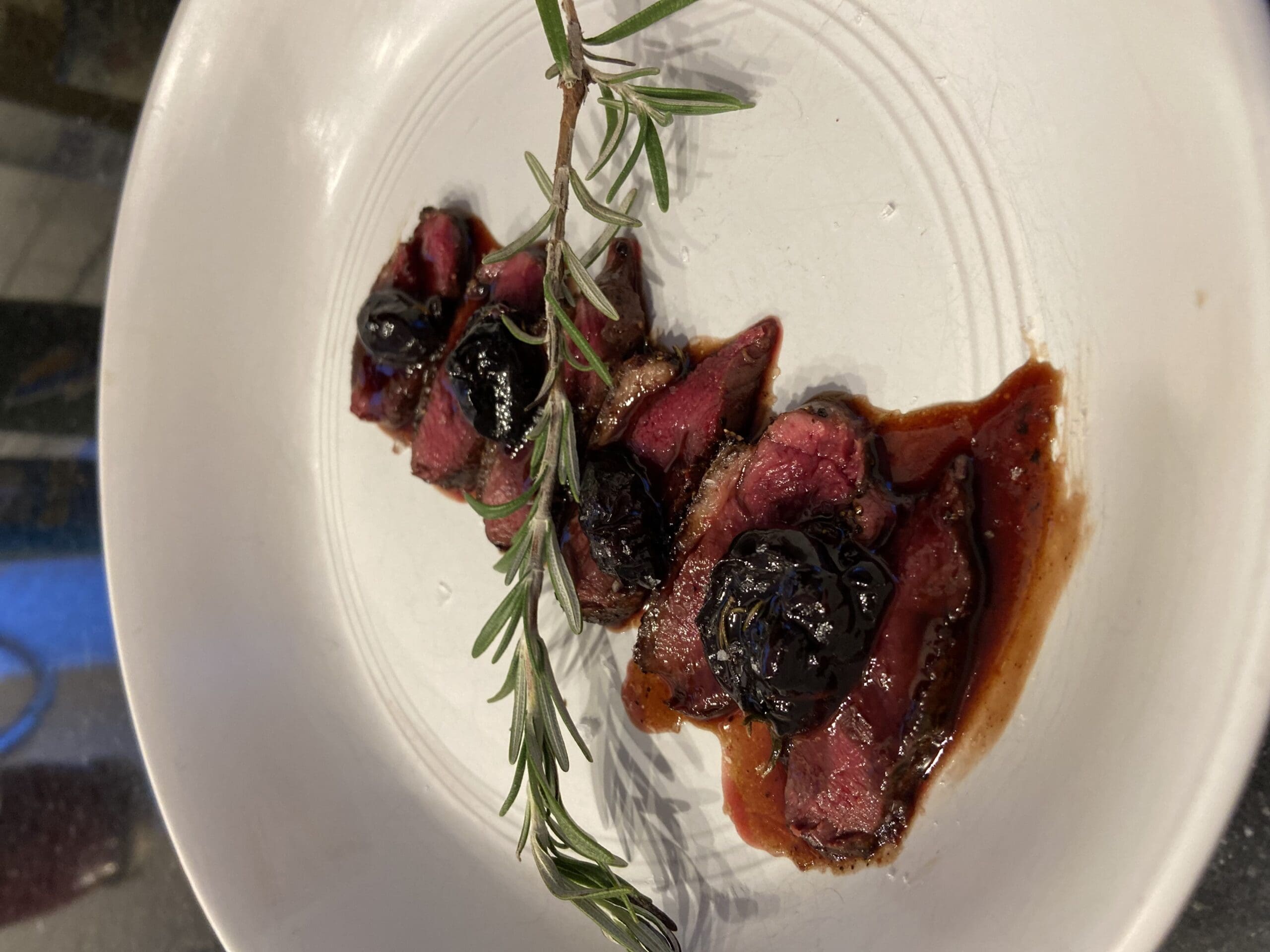
Grape and Red Wine Reduction over Seared Redhead Duck Breast
Rare, tender wild duck breast gets topped with a rich, savory-sweet grape and Malbec reduction for an elegant wild game dinner.
Ingredients
- Half a bag of grapes
- Half a stick of salted butter
- Two sprigs of rosemary
- 1/4 cup brown sugar
- A pinch of salt
- A pinch of white pepper
- A pinch of ground thyme
- Half a cup of Malbec wine
- Redhead duck breast(s)
- Salt and pepper, to taste
Instructions
- Combine grapes, butter, rosemary, brown sugar, salt, white pepper, ground thyme, and Malbec wine in a saucepan.
- Simmer the reduction on low heat for 2 hours, stirring occasionally, until thickened and syrupy.
- Pluck the duck breast and pat dry thoroughly with a paper towel.
- Season both sides generously with salt and pepper.
- Place the breast skin-side down in a cold cast iron skillet.
- Bring the heat to high and sear skin-side down for 5 minutes.
- Flip the breast and sear the other side for 3 minutes, aiming for an internal temperature of about 130°F for rare.
- Let the breast rest for 5 minutes before slicing thinly.
- Spoon the warm grape and red wine reduction over the sliced duck breast and serve.
Cook’s Notes
Starting the duck skin-side down in a cold skillet helps render the fat slowly for crisp skin without overcooking the rare interior. Watch the reduction closely near the end of its 2-hour simmer so the sugars don’t scorch.
Ingredient Swaps
If Malbec isn’t on hand, another full-bodied red wine like Cabernet Sauvignon or Merlot works well, and any wild duck or goose breast can stand in for redhead. Seedless red grapes can replace regular grapes for a smoother reduction.
Serving Suggestions
Slice the breast thinly against the grain and fan it out on a plate, spooning the warm reduction generously over the top. This pairs nicely with roasted root vegetables or a simple wild rice pilaf.
Storage & Reheating
Store leftover duck and reduction separately in airtight containers in the refrigerator for up to 3 days. Gently reheat the duck in a low oven or skillet to avoid overcooking it past rare, and warm the reduction separately on the stovetop.
Common Questions
Why start the duck breast in a cold skillet?
Starting cold allows the fat under the skin to render slowly, giving you crispier skin without overcooking the delicate breast meat inside.
Can I make the reduction ahead of time?
Yes, the grape and red wine reduction can be made a day or two in advance and gently reheated before serving.
How do I know the duck is done to the right temperature?
Use a meat thermometer inserted into the thickest part of the breast; pull it from heat around 130°F for a tender, rare result.