

Late Spring Coyote Hunting: Why May is Prime Time
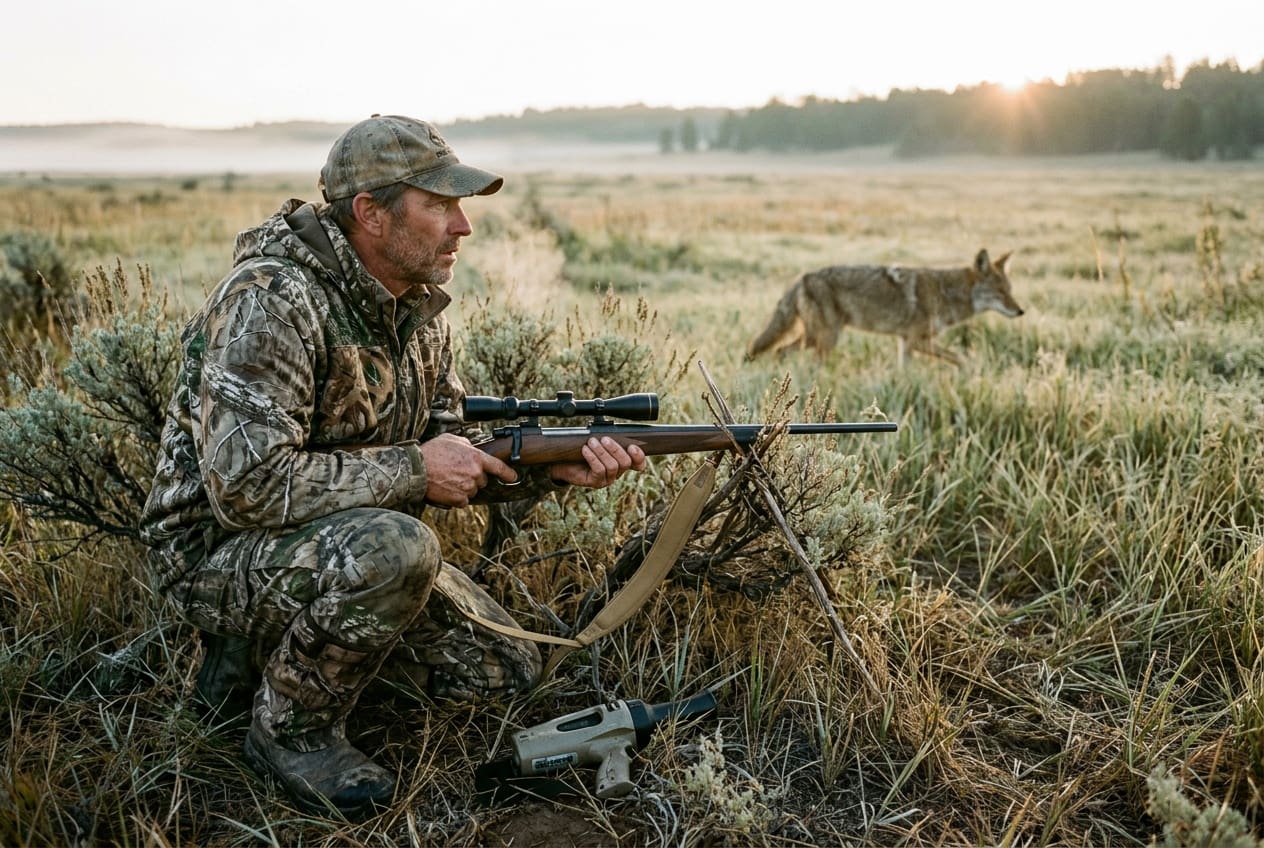
I was adjusting my electronic caller behind a fallen oak when I spotted him—a big boar coyote picking his way through the creek bottom, nose to the ground. Late May, perfect morning, and this dog was doing exactly what I expected. Late spring coyote hunting gets overlooked by most hunters, but it’s some of the best action you’ll find all year if you understand what drives these predators after pup season starts.
Why is late spring the best time for coyote hunting?
Late spring offers peak coyote hunting because adults are extremely active feeding hungry pups and defending territories. Breeding season stress is over, but food demands are at their highest with growing litters to support.
From mid-May through early June, adult coyotes cover serious ground hunting rodents, ground-nesting birds, and anything else they can catch. They’re less cautious than during winter because survival pressure shifts from avoiding danger to finding food fast. Thick spring cover also makes them bolder about moving during daylight hours. I’ve called in more coyotes during late spring mornings than any other time of year.
What calling strategies work best for late spring coyotes?
Focus on distress calls that mimic easy prey—wounded rabbits, bird distress, and fawn bleats work better than aggressive howls or challenge barks in late spring.
Hungry coyotes with mouths to feed respond to food opportunities, not territorial challenges. I start every stand with cottontail distress for 3-4 minutes, then switch to bird distress or rodent squeaks. Save the fawn bleats for areas with known deer populations. The FOXPRO electronic callers give you volume control that’s critical—start quiet and gradually increase if nothing shows in the first 10 minutes.
Where should you set up for late spring coyote stands?
Target transition zones between thick cover and open feeding areas, focusing on creek bottoms, fence lines, and field edges where rodent populations are highest.
- Set up 100-150 yards from heavy cover with shooting lanes out to 300 yards
- Position downwind of likely approach routes through draws and ditches
- Hunt areas with fresh tracks, scat, or livestock predation reports
- Focus on agricultural edges where ground squirrels and pocket gophers are active
What gear adjustments work best for late spring conditions?
Lighter camo patterns, quality optics for thick cover, and calls that cut through spring bird noise become essential as conditions change from winter hunting.
Ditch the heavy snow camo for lighter patterns that match new green growth. I switch to Mossy Oak Bottomland or similar patterns that work in mixed cover. Quality binoculars matter more in spring because you’re picking apart thick cover instead of scanning open fields. Your rifle setup stays the same, but consider a bipod for steadier shots through small openings. The Vortex Crossfire HD binoculars have saved me countless stands by spotting movement I’d have missed otherwise.
Buck’s Final Word
- Hunt early mornings when coyotes are most active returning from night hunts
- Keep stands short—15-20 minutes max before moving to new locations
- Use distress calls that mimic abundant spring prey, not territorial challenges
- Focus on agricultural edges and creek bottoms where rodent activity peaks
Get out there this week while spring conditions are perfect. Check your local regs, grab your predator setup, and target those transition zones at first light. Late spring coyotes are waiting—you just need to be in the right spot with the right sound.