
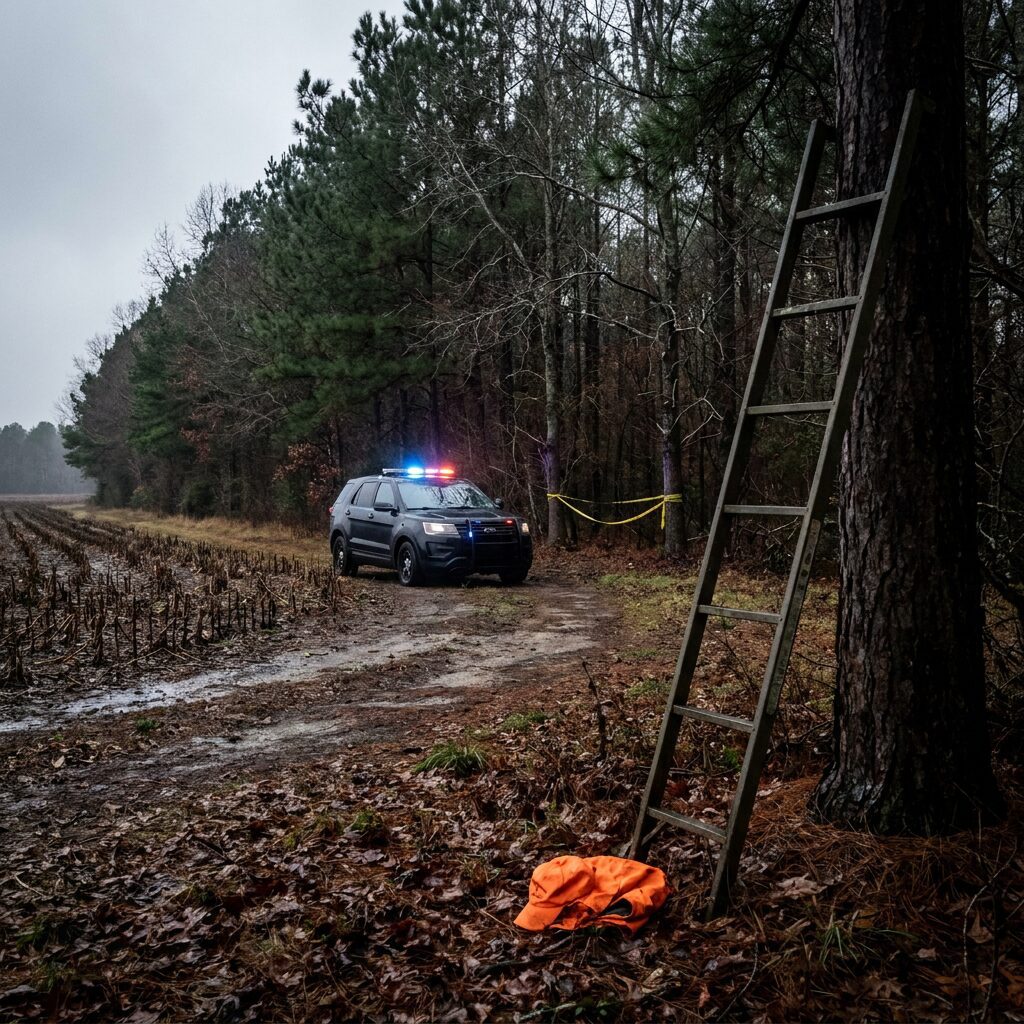

A 74-year-old hunter was arrested in Delaware after shooting a woman he mistook for a deer, according to PHL17.com.
That is the whole of what’s been reported so far. It’s thin, and I’m not going to dress it up. What I can do is tell you how a thing like this happens, because I’ve spent a lot of years watching hunters come close to it.
What Happened
PHL17.com, a Philadelphia-area station, carried the report. The facts it gives are short: the shooter is a 74-year-old hunter, the person he shot was a woman, the shooting happened in Delaware, and the hunter thought he was shooting at a deer. He has since been arrested.
The source does not say where in Delaware this took place, what day it was, what firearm was used, how badly the woman was hurt, or what charges the man faces. I don’t know those things either, and I won’t guess at them. When the courts or the state release more, we’ll report it. Until then, anyone telling you more than those five facts is filling in blanks.
How a Man Sees a Deer That Isn’t There
Before I ran this magazine I ran a processing shop in Wisconsin. Every November I’d see deer come across the scale with holes in places no careful shooter would put them. Hindquarters. Neck shots on does that were plainly walking away. Talk to those hunters for five minutes and you’d hear the same story: a flash of brown, a shape in the brush, a trigger pulled before the brain caught up. Most of the time it’s a deer and nobody thinks twice. The habit behind those shots is exactly what puts a person in the crosshairs on a bad day.
Hunter education instructors call it expectation. You sit long enough wanting a deer, and your mind starts building one out of whatever’s in front of you. A tan jacket. Someone’s hand moving near a tree trunk. A dog. The hunter doesn’t see a woman and decide to shoot. He sees a deer, clear as day, because that’s what he’s been staring into the timber hoping to see since before light. That’s why “I thought it was a deer” is one of the oldest lines in incident reports across Wisconsin, Michigan, Minnesota, and every other whitetail state I’ve hunted. It is rarely a lie. That doesn’t make it an excuse.
Age will come up in the comments, so I’ll get to it now. I’m closing in on sixty myself, and my eyes at dusk aren’t what they were at thirty. That’s no knock on older hunters. Some of the most disciplined shooters I know are past seventy. But failing light and aging eyes stack up, and the honest ones among us adjust by passing more shots. I don’t know anything about this particular man’s eyesight or experience, and I’m not going to pretend I do.
The Rule That Would Have Stopped It
Every hunter education course in the country, the ones built on International Hunter Education Association standards, drills the same core point: be sure of your target and what’s beyond it. People recite it like a prayer and forget why it’s there. It exists because a firearm can’t take anything back. Once that trigger breaks, nothing you do can pull the shot back into the barrel. So the whole decision has to happen before it, and it has to end in certainty, not a hunch.
In practice, that means you identify the entire animal. Head, body, legs, and for bucks, antlers. Not “brown,” not “movement,” not “it’s right where the trail comes out.” If you can’t see the whole deer, you don’t have a deer. You have a guess. Glass it with binoculars rather than your scope, because a scope puts your muzzle on whatever you’re looking at. Keep your finger off the trigger until the animal is confirmed and the shot is clear.
Blaze orange helps, and most states require it during firearm deer seasons for good reason. Here in Wisconsin, at least half your clothing above the waist has to be blaze orange or blaze pink during gun deer season. But orange protects the person wearing it. It does nothing about a shooter who fires at a shape. Non-hunters walk dogs, cut firewood, and check fence lines in deer woods every fall, and they don’t owe us a hunter-orange vest to stay alive. That burden falls on the one holding the gun.
Frequently Asked Questions
Can a hunter get arrested for shooting someone by accident?
Yes. A 74-year-old hunter in Delaware was arrested after shooting a woman he mistook for a deer, according to PHL17.com. Most states have laws covering careless or reckless handling of a firearm while hunting, and an honest mistake doesn’t erase criminal liability when basic target identification is skipped.
How do hunters mistake a person for a deer?
It almost always comes down to shooting at movement, color, or a partial shape instead of a fully identified animal. Hours of watching and wanting to see a deer can lead the brain to fill in what isn’t there, especially in low light or thick cover. The fix is simple: no shot until you’ve seen the whole animal and know what’s behind it.
What should I wear walking in the woods during deer season if I don’t hunt?
Wear blaze orange, a hat and a vest at minimum, and skip brown, tan, or white clothing that can read as a deer’s coat or tail. Put orange on your dog too. It won’t stop a careless shooter, but it takes away the excuse and makes you visible to the hunters who are paying attention.
Buck’s Bottom Line: If you can’t see the whole deer, you don’t have a shot. You have a guess, and a guess can land you in handcuffs.