
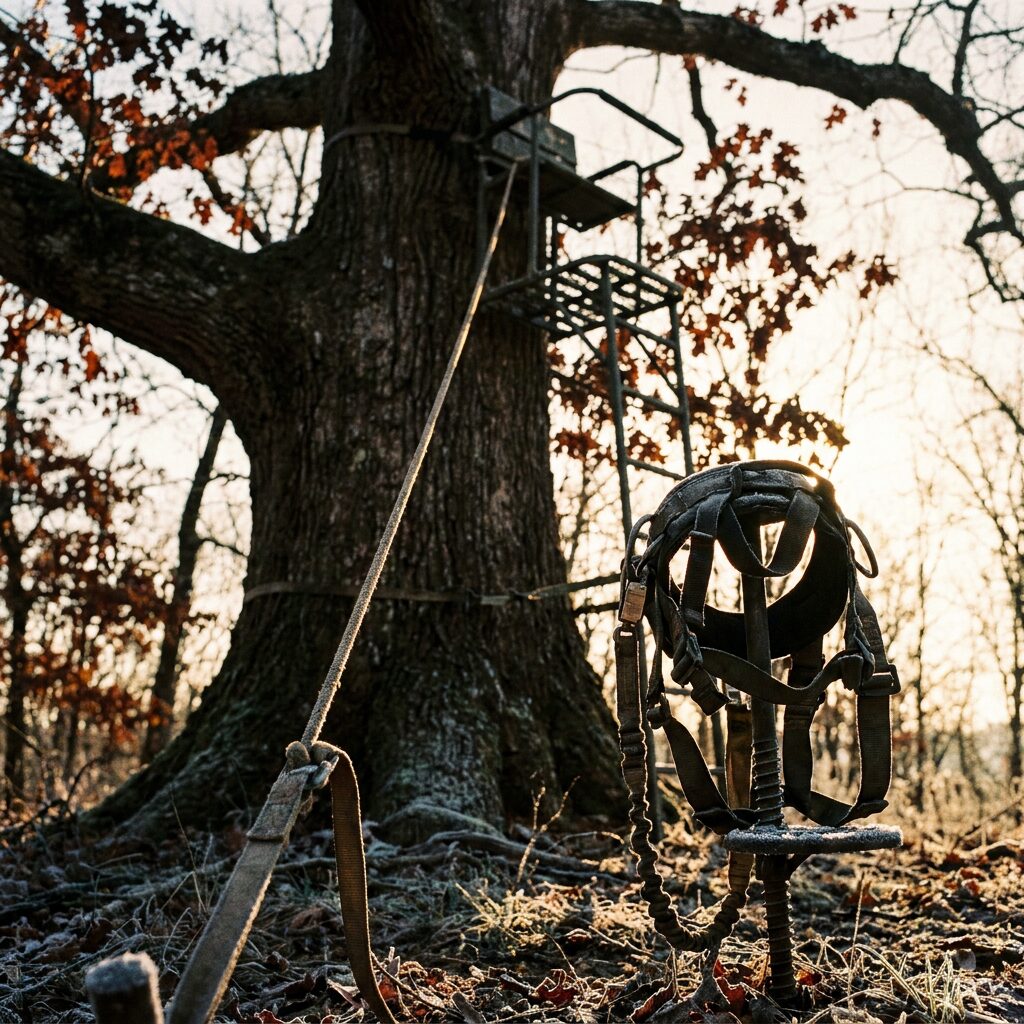

Tennessee station WTVC has published a report built on Tennessee Wildlife Resources Agency (TWRA) records that highlight the dangers tree stands pose to hunters, running under a headline that tells hunters to “buckle up.”
That’s a message worth repeating in every deer camp in the country, and not only in Tennessee.
What Happened
According to WTVC, TWRA records point to tree stands as a real hazard for Tennessee hunters. That’s what I can tell you with confidence. The material available to me is the headline and not much else. I don’t have the specific counts, injury details, counties, or dates the station may have pulled from those records, and I’m not going to guess at them. If you want the numbers, go read WTVC’s piece.
The headline’s framing is clear enough, though. A state wildlife agency’s own files show that people get hurt in and around tree stands, and the station’s advice is to strap in. I don’t need a spreadsheet to agree with that.
Where Guys Actually Get Hurt
I’ve hunted Wisconsin whitetails out of trees most of my life, and I spent years behind a processing counter before I ever sat behind an editor’s desk. I heard a lot of stories across that counter, and the tree stand ones rarely started with someone falling asleep forty minutes into a sit. They usually started with somebody climbing. Cold, stiff fingers on a frosted ladder rung at 5:30 in the morning. A bow hanging off one shoulder. A strap left on the tree since August that the squirrels had been chewing on. The dangerous part of a tree stand isn’t sitting in it. It’s getting into it and getting out of it, and that’s exactly when too many hunters haven’t clipped in yet.
Here’s the pattern I’ve seen for decades. A lot of hunters own a harness now, and plenty of them wear one. What they don’t always do is stay tethered from the ground up. They wear the vest on the climb, clip to the tree once they’re settled, and then unclip before starting down in the dark with a deer on the ground and their heart still pounding. A harness that isn’t attached to anything is just an uncomfortable vest. I’ve been wrong before about plenty in the woods, but I’ve never met a hunter who regretted the extra ninety seconds it took to hook up properly.
There’s also gear age to reckon with. Midwest hunters tend to leave ladder stands and hang-ons up all season, sometimes for years. Sun, ice, and freeze-thaw cycles go to work on nylon straps and ratchets. Bark grows around cables. Before the opener, I pull every strap I’m going to trust with my weight and look at it in daylight. If it’s faded, frayed, or stiff, it gets replaced. Straps cost a few bucks, and emergency rooms cost a lot more.
What Buckling Up Really Means
“Buckle up” should mean more than owning a harness. A complete fall-arrest setup has three parts. First, a full-body harness that meets current manufacturer standards. Second, a lifeline, which is a rope anchored at the top and base of the tree with a sliding prusik knot, so you’re connected from the moment your boot leaves the dirt until it touches down again. Third, a haul line for your bow or unloaded firearm, because climbing with gear in your hands takes away the three points of contact you need on the way up.
Each piece exists because of how people fall. The lifeline is there because the climb is the danger zone. The haul line is there because a hunter with one hand on a rung and the other on a rifle is off balance. The full-body harness replaced the old waist belts because a belt can do real damage when it catches a falling man. The tether should be snug, with little slack between you and the tree, so that a slip ends with you standing back on the platform instead of dropping below it.
Suspension is the part people skip. If you do fall and end up hanging in a harness, the leg straps can restrict circulation, and that becomes dangerous surprisingly fast. Carry a suspension relief strap so you can stand in it and take pressure off your legs. Keep your phone on your body, not in the pack hanging on a hook. And tell somebody which tree you’re in. Hunter education programs cover all of this, and the International Hunter Education Association is a good place to start if it’s been a while since your course.
Frequently Asked Questions
Do I really need a safety harness if my tree stand is only 12 or 15 feet up?
Yes. A fall from that height onto frozen ground, roots, or your own ladder can break bones or worse. Height gives a false sense of security. Wear a full-body harness and stay connected to the tree at any height.
When do most tree stand falls happen?
Hunter education courses consistently teach that climbing up and climbing down are the highest-risk moments in tree stand hunting. That’s why a lifeline running from the base of the tree to the stand matters so much. It keeps a hunter tethered for the entire climb, not just while seated.
What is suspension trauma and how do I prevent it?
Suspension trauma happens when someone hangs motionless in a harness after a fall and the leg straps restrict blood flow. It can become life-threatening if you can’t get down or get help. A suspension relief strap lets you stand and take the pressure off, and keeping a phone on your person makes getting help realistic.
Buck’s Bottom Line: Clip in before your boot leaves the ground, and don’t unhook until it’s back in the dirt.