

By Buck Garrett | Hunting Magazine
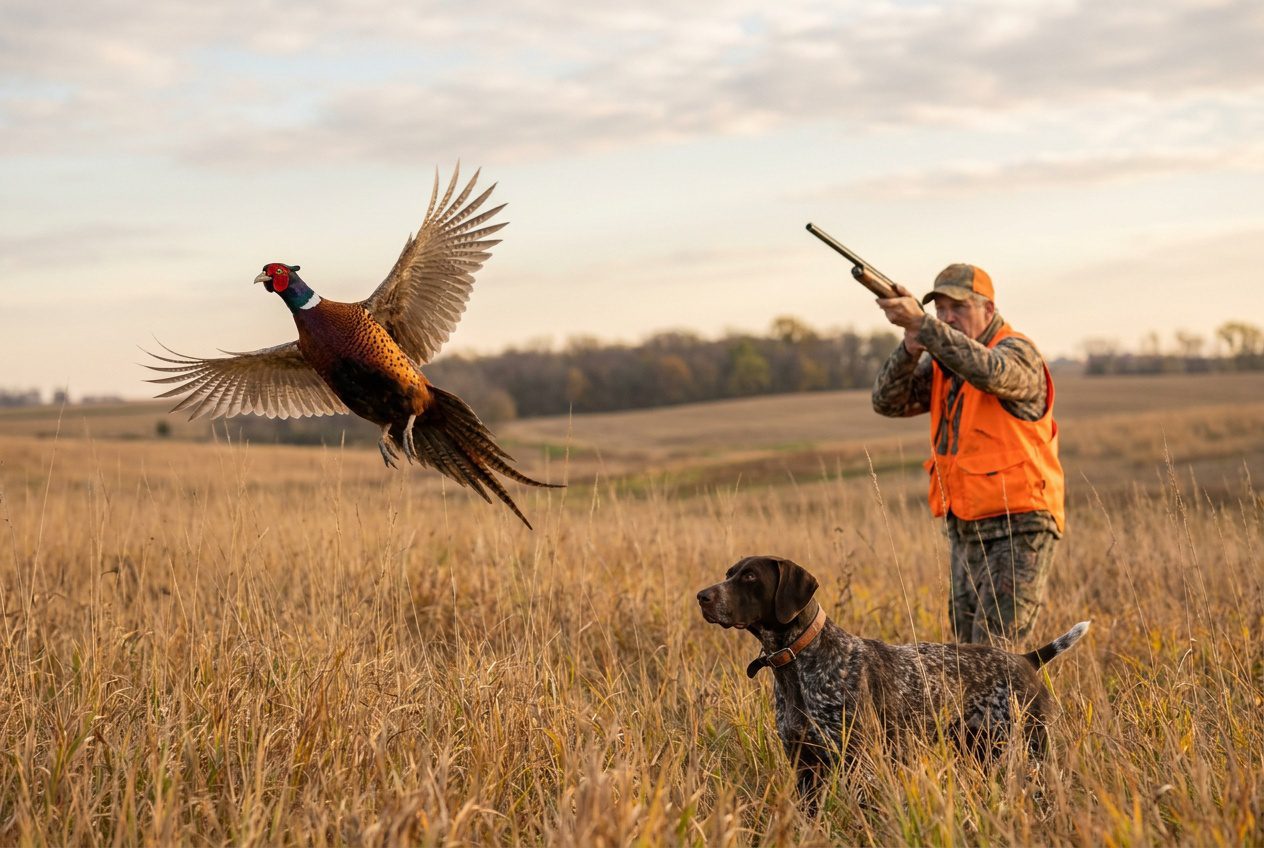
Iowa pheasant hunters have real reason to get excited heading into fall. The Iowa DNR’s annual August roadside survey averaged 23 birds per route this year — the second-highest count in more than a decade, trailing only the 2025 survey. Bobwhite quail held steady near the 10-year average, gray partridge numbers looked strong in traditional strongholds, and cottontail rabbits posted their best numbers since 2014. Iowa’s pheasant season opens Oct. 31.
Here’s what the numbers mean, region by region, and why this year’s count matters for planning your hunt.
Iowa Pheasant Population 2026: The Numbers
According to the Iowa DNR, this year’s statewide average of 23 birds per route is the second-highest mark since 2015. “Weather likely played a role in the lower counts this year, but 23 birds per route is the second highest average since 2015,” said Todd Bogenschutz, upland game biologist with the Iowa DNR.
The survey runs every year between Aug. 1–15 along the same 225 routes, each 30 miles long. DNR staff count pheasants, bobwhite quail, gray partridge, cottontail rabbits, and white-tailed jackrabbits during the drive. The most reliable counts come from cool, dewy mornings with sunshine and no wind — conditions that were harder to come by after Aug. 5, when the weather turned overcast, rainy, and foggy.
Why Iowa’s Pheasant Numbers Are Up This Year
Two factors drive Iowa’s pheasant population from year to year: winter severity and spring weather. This past year, most of the state came through a normal winter and moved into a wetter, warmer-than-normal spring — close to ideal conditions for nesting hens and newly hatched broods.
“We had good counts come in from across the state where we had good habitat and good winter and spring conditions,” Bogenschutz said.
That pairing of mild weather and standing habitat lines up with what upland conservation researchers have long documented: weather is the second most influential factor behind habitat in determining pheasant survival, and quality nesting and winter cover is what allows populations to absorb a bad year and rebound quickly when conditions improve, according to Pheasants Forever. Cold, wet springs are particularly hard on newly hatched chicks, which can’t regulate their own body temperature until roughly three weeks old — a detail that helps explain why this year’s warm, wet spring produced a strong bounce-back count instead of a crash.
Regional Breakdown: Where to Expect the Best Pheasant Hunting
- Northwest, North-Central, and West-Central regions: Counts should be comparable to last year’s strong 2025 survey — plan on these areas holding up as your best bets.
- Northeast region: Expect the biggest decrease in bird numbers of any region this year.
- Southwest, South-Central, and West-Central regions: Posted the highest bobwhite quail counts in the state.
- North-Central, Central, Northwest, and East-Central regions: Best gray partridge numbers, tracking with the open, treeless agricultural ground this species prefers.
- South-Central and Southeast regions: Leading the way on cottontail rabbits, which hit their highest statewide level since 2014 — 30 percent above the 10-year average.
What About Quail, Partridge, and Rabbits?
Iowa’s bobwhite quail index dropped 21 percent statewide but still sits right at the 10-year average — not a red flag, just a normal year-to-year swing. Gray partridge were most abundant in open agricultural country in the North-Central, Central, Northwest, and East-Central regions. Cottontail rabbits are the real standout this year: their population is the highest it’s been since 2014, and Bogenschutz called it “another good year for cottontails,” pointing to two consecutive strong years for rabbit numbers statewide.
When Does Iowa Pheasant Season Open in 2026?
Iowa’s pheasant season opens October 31, 2026. With bird numbers running near a decade-high in several regions, expect solid competition for public hunting ground on opening weekend — especially in the Northwest, North-Central, and West-Central regions where numbers held steady from last year’s strong survey.
FAQ: Iowa Pheasant Hunting 2026
How many pheasants per route did Iowa’s 2026 survey find?
An average of 23 birds per route — the second-highest count since 2015.
When does Iowa’s 2026 pheasant season open?
October 31, 2026.
Which Iowa regions have the best pheasant numbers this year?
The Northwest, North-Central, and West-Central regions are expected to be comparable to 2025’s strong survey. The Northeast region is expected to see the biggest decline.
Why did Iowa’s pheasant population increase this year?
A normal winter followed by a wetter, warmer-than-normal spring created favorable nesting and brood-rearing conditions across most of the state.
How does weather affect pheasant populations?
Weather is the second most important factor after habitat. Mild winters and dry, moderate springs improve nest and chick survival, while harsh winters and cold, wet springs can significantly reduce populations.
Sources: Iowa Department of Natural Resources; Pheasants Forever