

Why Your Turkey Calls Aren’t Working This Late in Season
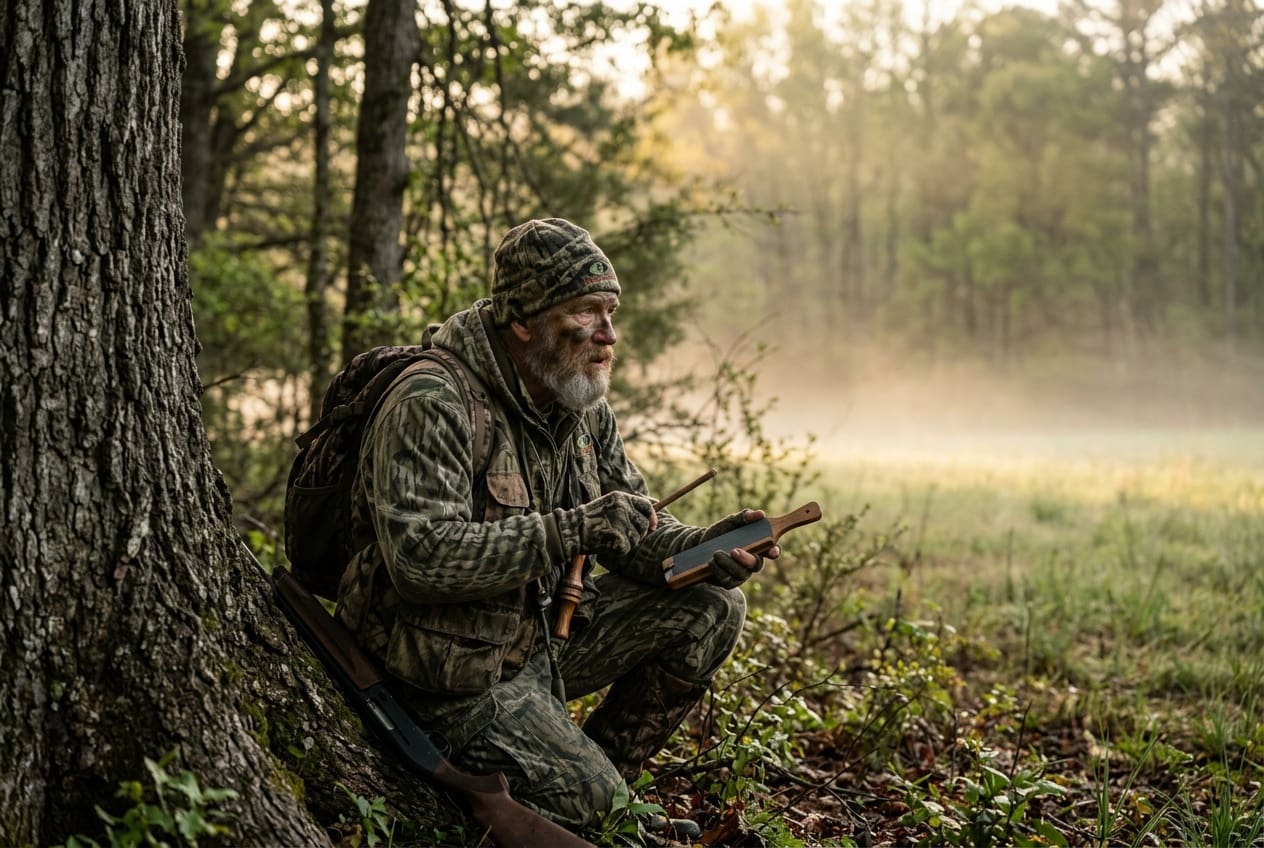
Sat in the same spot where I’d killed a gobbler opening week two years back. Perfect setup, fresh tracks in the dirt road, even heard him roost the night before. Come morning, I hit him with soft tree yelps just like the book says. Nothing. Tried a fly-down cackle when legal time hit. Still nothing. By 8 AM I was running every call in my vest like some kind of turkey call jukebox. That bird never made another sound, but I guarantee he knew exactly where I was sitting. Late season turkey hunting demands a completely different approach than those first magical weeks of April.
Why Do Gobblers Go Silent in Late May?
Pressured birds shut up because they’ve learned that gobbling gets them shot. After six weeks of hunters hammering every public roost and field edge, smart toms have gone into survival mode.
Breeding activity peaks in late April and early May, then tapers off as hens start sitting on nests. Gobblers don’t need to advertise as aggressively since most hens are already bred. Add hunting pressure to dropping hormone levels, and you get birds that move silent, roost quiet, and respond to calls about as well as a fence post.
What Calling Mistakes Are You Making on Pressured Birds?
Overcalling kills more late season opportunities than anything else. If a bird’s heard aggressive yelping and cutting for six straight weeks, more of the same won’t bring him in.
The biggest mistake is using the same calling sequence that worked opening day. Pressured gobblers have heard every YouTube calling champion’s routine multiple times. They know aggressive hen talk usually means trouble. Smart calling on late season birds means less volume, fewer calls, and more patience between sequences.
How Should You Adjust Your Calling Strategy?
Switch to soft, subtle calls that sound like real hens going about their business. Forget the aggressive cutting and loud yelping that fired up early season birds.
- Use soft clucks and purrs instead of sharp yelps – sounds like a hen feeding peacefully
- Try single soft yelps with 10-15 minutes of silence between calls
- Throw in content feeding purrs and soft clucks while staying completely still
- Use a gobble shaker or jake decoy to create jealousy without loud calling
Where Should You Hunt Late Season Birds?
Get away from obvious spots where every other hunter sets up. Late season birds use different areas than opening week gobblers.
Focus on thick cover, creek bottoms, and areas with multiple escape routes. Pressured birds want security more than perfect strutting fields. Hunting heavy cover and transition zones gives you better odds than sitting on field edges where birds feel exposed.
Buck’s Final Word
- Call 75% less than you think you should – silence often works better than sound
- Hunt areas with thick cover where birds feel secure, not wide open fields
- Use soft, natural sounds instead of aggressive competition calls
- Be ready for silent birds that slip in without making a sound
Put away the loud calls and hunt like the birds have a PhD in avoiding hunters – because by late May, they basically do. Set up in thick stuff, call soft, and be ready to sit still for hours. The birds are still there, they’re just not advertising their location to every hunter in the county.