
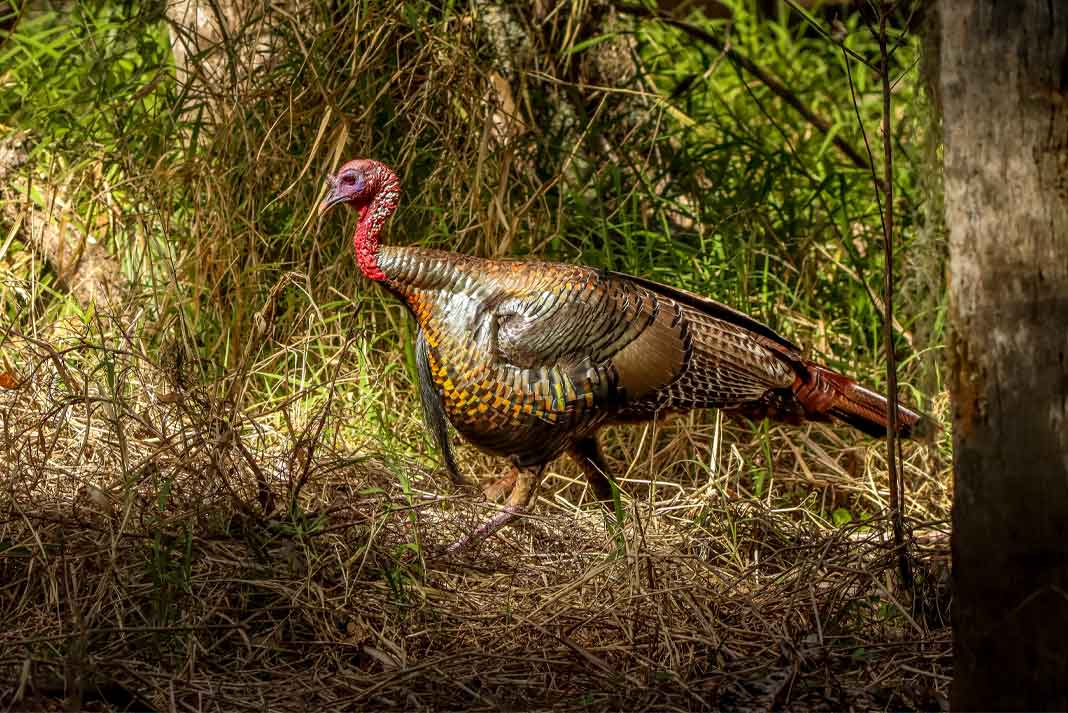

Turkey hunting can be a thrilling and difficult challenge for the avid hunter. It requires dedication, skill, knowledge, and experience to successfully take a turkey in the field.
While deer hunting may seem like an easier task due to its more widespread popularity, this does not necessarily mean that it is any less challenging than turkey hunting. In some cases, it can actually be much more difficult.
To begin, the environment in which turkey hunting takes place can make it a more challenging endeavor than deer hunting. Turkeys are found in wide open plains and woodlands, where they have plenty of space to run and hide from predators. The hunter must be adept at traversing this terrain in order to effectively track and locate the bird. Furthermore, turkeys’ sharp eyesight and acute hearing can make it much more difficult to get close enough for a good shot.
Another difference between deer hunting and turkey hunting is the equipment necessary for each activity. Deer hunters typically use rifles, while turkey hunters may need shotguns or bow-and-arrow setups. This difference in weaponry can make turkey hunting much more challenging, especially for those who are inexperienced with shotguns or bows and arrows.
Additionally, the ammunition used for each type of hunt is very different; deer hunters rely on bullet calibers, while turkey hunters must use specialized shotshells that offer a spread pattern optimized for taking down turkeys.
The tactics used in turkey hunting also make it more difficult than deer hunting. Because turkeys are so aware of their surroundings, the hunter must be incredibly stealthy and patient when pursuing a bird. This includes scouting an area beforehand to identify potential roost sites or feeding areas, as well as utilizing various calls and other decoys to coax a turkey into range.
Deer hunting, on the other hand, does not require as much advance preparation or planning; moreover, deer can often be taken from a distance with rifles due to their larger size and less sensitive hearing and vision.
Finally, the skills involved in turkey hunting demand an entirely different level of expertise than those used in deer hunting. Turkey hunters must perfect the art of calling, as well as understand the behavior and habits of the bird. This requires a deep knowledge of turkey ecology; for example, when a hunter knows where to find turkeys roosting and feeding during different times of day or year, it makes locating and taking down a turkey much easier.
Deer hunting, by contrast, does not require such an understanding of deer behavior and habitat; the hunter needs only to identify a likely area in which to pursue a deer.
All in all, turkey hunting is an incredibly challenging and rewarding experience for any hunter. With the proper knowledge and skill, a hunter can enjoy success in the field and bring home some delicious wild game birds. There are few things more gratifying than making an ethical kill on a wild turkey that will provide sustenance for your family. All of these factors combine to make turkey hunting a difficult and rewarding sport.
Pick Your Season and Start Scouting
Check your state’s turkey season dates and license rules now, then spend a couple of mornings before opening day listening for gobblers at first light so you know where birds are roosting. If you already hunt deer, you can use the same woodlot knowledge and trail cameras to see where turkeys travel and feed. Take a friend along on your first hunt if you can, because an experienced caller will teach you more in one morning than you’ll pick up in a week on your own.