

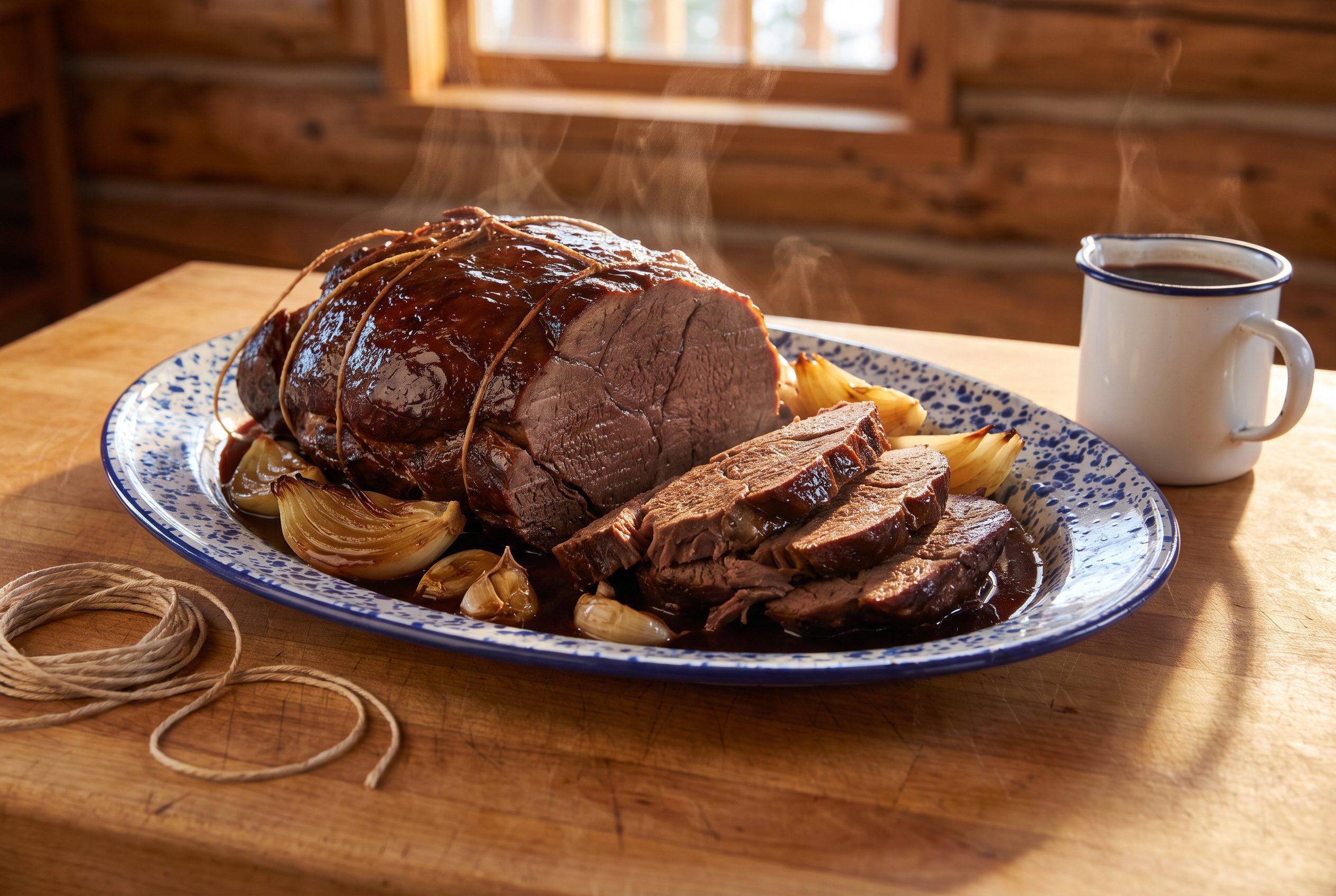
Moose Roast Recipe in the Slow Cooker with Root Vegetables
This moose roast recipe is a slow-cooker pot roast. You brown a 3 to 4 pound shoulder or rump roast hard, set it on carrots, parsnips, and potatoes with red wine and stock, and cook it on LOW for 8 to 9 hours until it shreds with a fork at about 200°F inside. Freezers fill up with those big, sinewy shoulder and rump roasts, and plenty of folks don’t know what to do with them. I worked the processing counter at my uncle’s meat locker in Ladysmith for ten years, and I’ve cut up somewhere north of 400 deer. Moose shoulder is built the same way, just bigger, and it’s loaded with connective tissue. You can’t fix that with a hot, fast cook. Time and moisture turn that tissue into gelatin. Brown it right, pick the right liquid, and let the slow cooker handle it while you’re at church or watching football.
Ingredients
- 3 to 4 lb moose shoulder or rump roast, silverskin trimmed, tied with butcher’s twine
- 2 tsp kosher salt
- 1 tsp coarse black pepper
- 2 tbsp bacon fat or vegetable oil
- 1 large yellow onion, cut into 8 wedges
- 4 cloves garlic, smashed
- 2 tbsp tomato paste
- 1 cup dry red wine
- 1 1/2 cups beef or game stock
- 1 tbsp Worcestershire sauce
- 2 bay leaves
- 4 sprigs fresh thyme (or 1 tsp dried)
- 1 1/2 lb Yukon Gold potatoes, halved (quartered if larger than an egg)
- 4 medium carrots, peeled and cut into 2-inch pieces
- 2 medium parsnips, peeled and cut into 2-inch pieces
- 3 tbsp cornstarch mixed with 3 tbsp cold water
Instructions
- Pat the thawed roast completely dry with paper towels, then season all sides with the salt and pepper. Browning can’t start until the surface water has cooked off, so a wet roast steams instead of searing.
- Layer the potatoes, carrots, and parsnips in the bottom of a 6-quart slow cooker. Use a 7-quart if your roast is over 4 lb. The vegetables act as a rack that holds the meat up out of the thickest liquid, and they soak up the drippings as it cooks.
- Heat the bacon fat in a 12-inch cast iron or heavy stainless skillet over medium-high heat until it shimmers. Sear the roast 3 to 4 minutes per side, ends included, until every surface has a deep brown crust. Don’t move it until it releases on its own. This is where people mess it up: pale gray meat gives you a flat-tasting braise, and the slow cooker can’t brown anything later.
- Set the roast on top of the vegetables. Lower the skillet to medium, add the onion wedges and garlic, and cook 3 minutes until the edges color. Stir in the tomato paste and cook 1 minute until it darkens to brick red.
- Pour in the red wine and scrape the browned bits off the bottom of the skillet with a wooden spoon. Simmer 2 minutes to cook off the raw alcohol bite, then stir in the stock, Worcestershire, bay leaves, and thyme.
- Pour the skillet contents over the roast. The liquid should come about halfway up the meat, not cover it. The exposed top braises in steam and keeps its crust, and too much liquid dilutes your gravy.
- Cover and cook on LOW. A 2 to 3 lb roast takes 7 to 8 hours, a 3 to 4 lb roast takes 8 to 9 hours, and a 4 to 5 lb roast takes 9 to 10 hours. On HIGH, figure about 4 1/2 to 6 hours total, though LOW gives a more tender result. Keep the lid on for at least the first 6 hours.
- Check doneness by pushing a fork into the thickest part and twisting. It should pull apart with almost no resistance. An instant-read thermometer should read 195°F to 205°F inside. That’s the range where the collagen in a whole-muscle moose roast has broken down, and it’s far past any safety concern. If the meat still fights the fork, cover it and give it another 45 to 60 minutes.
- Move the roast and vegetables to a platter, tent loosely with foil, and rest 15 minutes. Snip off the twine.
- Pour the cooking liquid into a saucepan and skim off the fat. Discard the bay leaves and thyme stems. Bring to a simmer over medium heat, whisk in the cornstarch slurry, and simmer 2 minutes until the gravy coats a spoon. Taste and adjust the salt, then slice or pull the roast into chunks and spoon the gravy over the meat and vegetables.
Recommended for this recipe
Cook’s Notes
Here’s the part nobody tells you: take the silverskin off the outside of a shoulder roast, but leave the seams of connective tissue running through the middle alone. The outer silverskin never breaks down and shrinks as it heats, which squeezes the roast into a tight knot. The interior seams are what melt into gelatin and make the meat feel moist. Lean moose depends on them, since it has almost no fat marbling to do that job.
Tie the roast even if it came out of the freezer as a neat block. A shoulder roast is several muscles held together, and after 8 hours they fall apart into a pile of scraps if nothing holds them. Loop twine every 1 1/2 inches. The roast cooks more evenly and slices clean for the table.
Ingredient Swaps
Other game: an elk or deer shoulder, rump, or neck roast works exactly the same way. For a deer roast under 3 lb, use the 7 to 8 hour window. Bear shoulder is excellent here, and bear must reach at least 160°F, which this braise passes easily on its way to 195°F. Fish doesn’t belong in this recipe. It would turn to mush long before the vegetables are done.
Liquid: swap the wine for 1 cup of dark beer, such as a porter or stout, for a sweeter, maltier gravy. You can also use 1 more cup of stock and a tablespoon of red wine vinegar to keep some acidity, which balances the rich, dark meat.
Vegetables: rutabaga, turnips, or celery root can replace the parsnips in the same 2-inch pieces. Red potatoes hold their shape a little better than Yukons if you like firm chunks. Skip russets, which break down into the gravy.
Fat: beef tallow or rendered bear fat both work in place of bacon fat. Either one adds some richness to a very lean roast.
Serving Suggestions
This is Sunday dinner food, the same kind of long, slow braise as the bear shoulder I’ve made at deer camp for over a decade. I serve it the same way: on a big platter with the vegetables around it, gravy poured over everything, and a loaf of crusty bread to drag through what’s left on the plate. A spoonful of prepared horseradish on the side cuts the richness. If you have leftovers, pile the pulled meat on toasted rolls with a little gravy for Monday lunch. Karen and the kids go through that faster than the roast itself.
Storage & Reheating
Refrigerate leftovers within 2 hours in an airtight container and use them within 4 days. Always store the meat covered in gravy or cooking liquid. Lean moose dries out fast if it sits exposed. It freezes well for up to 3 months. Pack it in freezer bags with the gravy, press out the air, and freeze flat. Thaw overnight in the fridge. To reheat, put the meat and gravy in a covered saucepan over medium-low heat with a splash of stock, and stir now and then until it steams, about 10 to 15 minutes. You can also warm it in a covered baking dish at 300°F for 20 to 25 minutes. Skip high-power microwaving, which tightens up the meat.
Common Questions
How long do you cook a moose roast in a slow cooker?
Cook a 3 to 4 pound moose roast on LOW for 8 to 9 hours. On HIGH, it takes about 5 to 6 hours. It’s done when a fork twists through it easily and the inside reads 195°F to 205°F, which is the range where the connective tissue has broken down.
Do you have to brown a moose roast before putting it in the slow cooker?
Yes. Browning is where most of a pot roast’s flavor comes from, and a slow cooker never gets hot enough to create that crust itself. Sear every side in a hot skillet for 3 to 4 minutes, then use wine or stock to scrape the browned bits into the pot.
What is the best liquid for a moose roast recipe?
A mix of dry red wine and beef or game stock works best. The wine’s acidity balances the rich, dark meat, and the stock gives the gravy body. Dark beer or extra stock with a splash of vinegar are good substitutes if you don’t cook with wine.